How to Build a Guided Missile
Sidewinder: Creative Missile Development at China Lake, Ron Westrum (1999)
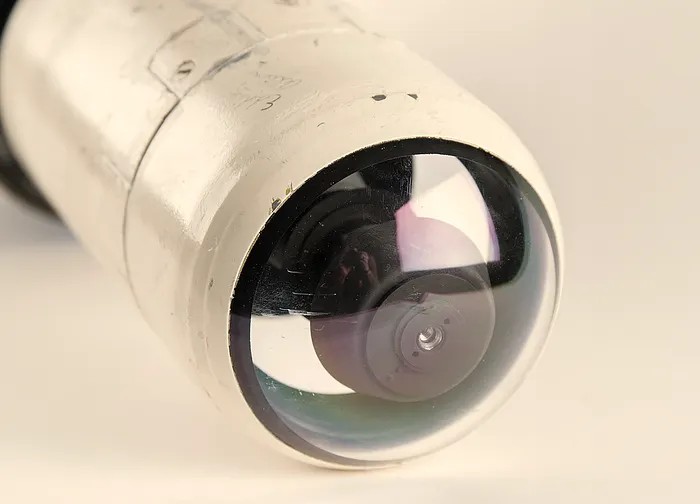

It’s the 28th of September, 1958, and we’re fifty thousand feet above the Taiwan Strait. For days now Nationalist and Communist fighter jets have been entangled in dogfights as the mainland probes the defences of its “wayward province”. These engagements should, in theory, be one-sided: the Communist MiG-17s have five thousand feet of ceiling on the aging Taiwanese F-86es and can loiter above their opponents, descending to strike when conditions favor them.
In practice they are one-sided. The Communists will lose 31 MiGs to down just two Taiwanese Sabres. Because Taiwan has a secret weapon, fresh from the US Navy’s R&D labs: the AIM-9A Sidewinder, one of the world’s first air-to-air guided missiles. It’s the first time any guided missile has been used in air-to-air combat.
But now it’s the 28th, just four days after Taiwan’s first successes with the weapon, and a Taiwanese pilot is hot on the tail of a MiG. He lines up the shot on its glowing tailpipe, hears the telltale growl of a lock in his headset, and squeezes the release. The Sidewinder streaks into its target like it’s on rails — but the Sabre pilot watches incredulously as his missile smashes into the MiG’s wing without exploding. Spooked, the Communist pilot flees for home, still in control of his aircraft. He manages to land with the missile lodged in his wing; within weeks the intact Sidewinder is in the Soviet Union.
What the Russians find inside is nothing less than “a university offering a course in missile construction technology”. To say they were impressed is an understatement:
[The Sidewinder] made McLean a cult hero in the former Soviet Union engineering community. While the comparable Soviet air-to-air missile had thirty-four radio tubes, Sidewinder had only fourteen—and only nine of these were used during flight, which gave rise to the oft-quoted “seven or eight tubes.” When McLean received his presidential award in 1958, a group of missile engineers in Moscow drank a toast to him.1
But Sidewinder was more than a marvelous piece of design. It had been developed more rapidly than its rivals, under the table and on a shoestring budget by a tiny team. Unlike its competitors, it did not require any guidance equipment mounted on the aircraft, meaning it could easily be integrated with almost any platform. But, most importantly, its unit cost was an order of magnitude lower than any alternative.
How did they do it?
Who the hell is McLean?
Bill McLean is to Sidewinder as Kelly Johnson is to the SR-71 Blackbird. And just as the story of Johnson and the SR-71 is also the story of the Skunk Works itself, the story of Sidewinder is also the story of Naval Air Weapons Station China Lake. McLean would come to be synonymous with China Lake, playing a central role in shaping it as an institution and ending his career as its technical director.
McLean was born in Portland in 1914. Maybe we shouldn’t be too interested in his early life - the most important factor here was that he was Bill McLean, just like how we can’t explain Stalin purely with his childhood abuse and Georgian origins. But it is striking how the environment of the time was seemingly fine-tuned to produce an excellent weapons designer. He came from a line of contrarian Presbytarian ministers noted for setting up in communities hostile to their views. His family was poor, and because this is 1914 that’s real, material poverty, meaning he grew up not just having to constantly work on things and make contact with reality but also having to do all of this on a strict budget. It was a broad education: Sewing, construction, plumbing, electrical work, and automotive repair. Having to scrounge for something that might work and build your own (simple, straightforward) solution to a problem, rather than outsourcing, was a necessity.2
Then they sent him to university at Caltech. Here a few more common ingredients are added to the mix, namely a demanding environment and close contact with experienced mentors. Standards were high: McLean, who got straight Bs, was 9th in his undergraduate cohort. Upon advice from the faculty he pursued a kind of barbell strategy, doing a PhD in nuclear physics, in some ways a stark constrast with his years of aggressively practical work at home. But of course this was the 1930s. Physics was still a relatively scrappy discipline, and McLean’s supervisor insisted that grad students build the hardware to run their experiments themselves. This was a boon for McLean, who was always more interested in the equipment than physics itself:
Jennings, who met him many years later at China Lake, put it best: “If you came up with a new algorithm, McLean would sign the patent application, but if you came up with a new device, he would come down to the lab in person to see the hardware.”3
Like all great scientists, what distinguished McLean wasn’t technical aptitude or creativity, but a finely honed taste in research. He had an intuitive sense of what to work on, and an ability to immediately grasp the implications of a new development. You can see the foundations of this in his experimental work. It’s very open-ended, pure R&D at the limits of what was known about physics at the time, bouncing around between problems. As soon as you produce a solution you move on to something competely different, without having to waste time on things like “commercial viability” or “requirements” or “manufacturability”. (Those would come later).
McLean graduated in 1939, another fortuitous coincidence. The war pulled him away from academia, which never suited him anyway, and into weapons development work on fuses. There was no time for hierarchy or bureaucracy. Jacob Rabinow was a Russian immigrant and inventor (he would later patent an early form of magnetic disk storage) who found himself working at the Bureau of Standards in 1941; his promotion to McLean’s group was emblematic of the culture at the time:
A man of few words, Dryden [his supervisor] asked him what he knew about ordnance, to which Rabinow replied, “Not very much.” Dryden handed him a book on the subject and told him to read it. Rabinow read the entire volume over the weekend. When he reported back, Dryden mentioned “a few problems” and asked him to design an air pressure–actuated switch. Rabinow designed the switch and asked the machine shop to make it. The technicians knew that Rabinow was a superb technician—he cut the threads for his Leica’s telephoto lens by hand—and were eager to help. They were impressed by the fast-talking engineer who could also use machine tools. “I could get the machine shop to do anything,” he recalls, “because anybody who could cut threads by hand was God.” They made the switch overnight and Dryden was duly impressed. When Rabinow carried off a second design job with equal aplomb, Dryden had seen enough. “Come,” he said. “Where are we going?” Rabinow asked. “Never mind, just come.”
Dryden took him to a room in the next building. Full of tinkerers, the room seemed a madhouse. Dryden, unperturbed, called to a young man who turned out to be Bill McLean. Dryden’s introduction was typically brief. “Bill, this is Jake, he has mechanical aptitude.” That was all he said, but from Dryden, this was high praise. When Rabinow asked what they did, McLean merely replied, “You’ll find out.” Thus Rabinow joined McLean’s group specializing in bomb and rocket arming systems.4
Most importantly, McLean received a crash course in working with technicians and designing things that would be mass-manufactured. An arming mechanism he designed had a boss on a rotor intended to prevent the part being inserted in the armed position. Visiting the production line, he found that the Bureau’s technicians had decided the feature was superfluous, and were carefully filing it off during the assembly of each unit. “I have never again been tempted,” McLean said of the experience, “to believe that a product can be produced by means of drawings alone.”5
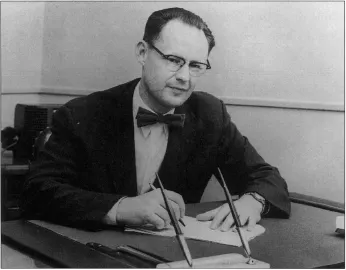
Thus equipped, McLean left the war years in search of a problem worthy of his powers.
China Lake
In 1942, Charles Lauritsen had a problem. Lauritsen was an interesting charachter in his own right. He’d been a student of Robert Millikan, and had made significant contributions to nuclear physics in the breakneck years of the 1930s while supervising McLean’s PhD in turn. But, like McLean, the war had redirected him toward more practical matters. In 1941 he had stood up a rocketry program at Caltech, but it rapidly became apparent that Pasadena was not an ideal test range.
Thankfully Deak Parsons6 and L.T.E. Thompson at the nascent OSRD had been interested for some time in setting up a proper Navy R&D centre, where the military could collaborate with civilian scientists and engineers. So, in 1943, a chunk of the Mojave Desert was carved out to become the Naval Ordnance Test Station. Lauritsen would soon leave to work on other things, including the Manhattan Project, but NOTS distinguished itself during the war, developing several successful rockets that saw mass production and combat. The wartime culture solidified, basically similar to McLean’s work at the Bureau of Standards - flat hierarchy, rapid prototyping, close collaboration with users in the fleet.
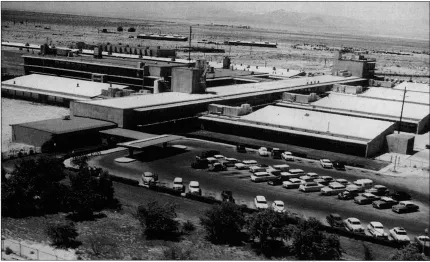
One of China Lake’s great advantages was that it was miles from anywhere in the middle of an inhospitable desert. This was what attracted McLean initially: he had been frustrated at the Bureau of Standards by the three-hour drive between the lab and the test range. But at China Lake design, prototyping, and testing all happened in the same place. He joined in 1945 as the director of the Aviation Ordnance Divison.
THESE THINGS WILL NEVER BE USEFUL!
Guided missiles quickly became a focus. Postwar, the biggest concern of the US military was suddenly being able to shoot down Soviet nuclear bombers. China Lake, with its air-launched rocket pedigree, was sure to be involved. Initially, its role was limited to testing of designs developed elsewhere.
From his position running Aviation Ordnance, McLean spent a lot of time thinking about guided missiles. As early as 1946 he could see that the only way to make a system really work would be to put all of the guidance inside the missile itself. But this wouldn’t be enough. The guidance package would have to be radically simple. This was the only way to produce a weapon that would be reliable in combat and able to compete with the strengths of unguided rockets. Early developments in the field were producing unreliable, complex designs which often relied on external signals for guidance. During the late 40s guided missiles were treated like lasers or railguns today:
Fred A. Darwin, then executive secretary of the Guided Missiles Committee of the Department of Defense, put it this way: “Day-by-day, then with increasing acceleration, I became convinced of something I considered important: THESE THINGS WILL NEVER BE OPERATIONALLY USEFUL, Even Should We Make Them Perfect.”7
McLean thought he could do better.
But McLean also understood the importance of going slowly to begin with, only moving into high-speed development once a sound concept had been identified. Before Sidewinder development really began in 1947, he’d spent three years thinking about and discussing the guided missile problem. He’d travelled to visit the major programs and find out what their biggest problems were. This was all happening inside his head; with no collaboration yet, the initial design phase could proceed at the speed of thought.
By early 1947 something was starting to coalesce. McLean knew, first of all, that his system would need to use an infrared seeker. To simplify the guidance package as much as possible the seeker would have to be passive, i.e. rely on picking up radiation the target was already giving off. Some approaches used a semi-active seeker which locked on to radar that the target was painted with by the firing aircraft. But this wasn’t good enough for McLean: it meant the missile could only be used by aircraft designed around it, rather than a system that could easily be fitted onto any platform. Only Sidewinder could have been rigged onto the Taiwanese Sabres with a few weeks of clandestine work. It also meant the user needed to keep the target lined up until impact, rather than a system that could be ‘fired and forgotten’.
Jet aircraft could be counted on to give off large amounts of heat more than anything else. Infrared it was.
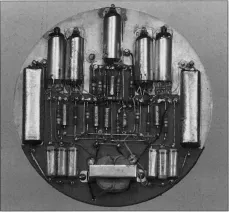
A lead sulfide photocell could be used to provide a current when detecting infrared radiation. It would need to be mounted in a simple, analog-and-mechanical system. The photocell would be mounted on a gyroscope and use its output to feed electromagnets that would precess the gyro to focus on the target; the seeker would then send signals to the missile’s control surfaces to align the missile with where the seeker was looking. The gyroscope would also serve to keep the seeker stabilized on target as the missile pitched and rolled in flight.
The program began quietly. McLean’s Ordnance group did not have the remit to be developing their own guided missile8, so the work had to be carefully presented - as a “homing rocket” or “intelligent fuze” - and funds had to be creatively allocated. Initial money came out of the pot for fuze development, which turned out to be a boon. Fuzes were highly classified, allowing Sidewinder to fly under the radar. McLean hand-picked a group of a few colleagues to start de-risking the design by building and testing his seeker concept. Work proceeded on nights and weekends.
Falcons and Sparrows
Meanwhile, other programs were forging ahead. By the early 1950s it became apparent that there were two main competitors to Sidewinder: the Falcon, developed by Hughes Aircraft for the Air Force, and the Sparrow, developed by a variety of firms but eventually Raytheon for the Navy.
These programs were almost totally polarised versions of Sidewinder.
Firstly, they had large amounts of resources and official backing. Going through official channels meant requirements, and lots of them; McLean would later lament the “technical straitjacket” this forced on engineers at Hughes during development. Particular requirements severely constrained the design space, like the need for “all-weather” capability. This sounded good on paper but limited designs to the use of radar, with all its active or semi-active attendant issues. The Falcon was originally developed as a weapon for bombers to fire backwards at pursuing fighters, meaning it needed “all-aspect” tracking - the ability to lock on to the front of an aircraft, rather than just its glowing tailpipe. By the time Falcon shifted to a fighter weapon, radar guidance was locked in. Both programs ended up settling on semi-active radar guidance after the Sparrow II, which had its own onboard active radar, failed.
This wasn’t to say there were no upsides to radar tracking; all-weather and all-aspect were real advantages, as was range. Radar missiles would lock on to a particular frequency, meaning that there were few issues with background interference. In contrast, early IR missiles would often chase reflections from bright clouds. During the early years of Sidewinder it was unclear whether IR seekers could achieve the required performance; early versions could only track targets within a few hundred feet, whereas radar had been proven at and in almost every conceivable scale and domain during the war.
Radar had political advantages too. Semi-active meant close integration with the aircraft, which meant new purpose-built jets for the Air Force and Navy. Falcon and Sparrow slotted in well with the prevailing vision at the time of a web of automated electronic systems that could detect bombers, scramble interceptors, navigate them to their targets and guide their missiles in for the kill. Falcon was a “pilotless interceptor” to Sidewinder’s “intelligent fuze”.
The high profile also meant large amounts of resources. By 1950 Sparrow III had 600 engineers working on it; both Sparrow and Falcon would come to involve thousands of staff, compared to the few dozen China Lake personnel who would do most of the development work on the original Sidewinder. At one point Lee Jagiello, the AIM-9A’s sole aerodynamicist, became concerned when he realised that Hughes had 300 people working on the Falcon’s aerodynamics alone. These complex org charts shipped complex designs (Sparrow III had 72 radio tubes to Sidewinder’s “seven or eight”), which meant expensive, unreliable systems with small warheads. This complexity would dog Falcon’s infrared variant as well during the 1950s - it wasn’t just an issue with problem selection.
Those resources meant both programs had to have the best in all spheres, again in contrast with Sidewinder:
Chief Petty Officer John J. McManus, “a little black-haired Irishman with mischief in his soul,” told Buchanan the team needed some test equipment. Embarrassed, the colonel replied, “Gee, we don’t have any test equipment for the Sidewinder. What do you need?”
“Just a flashlight and a Simpson Meter,” said McManus with a straight face. Taken aback, Buchanan took them to see the Falcon test equipment, which consumed about forty feet of wall space. The missile moved on a rail from one station to the next, undergoing tests by a battery of equipment. Apparently, it took nineteen technicians to maintain the test equipment.9
Sparrow and Falcon were anointed by the military bureaucracy early in development and were already too big to fail before they had a chance to really fail at all. So when failure did arrive, it came in combat. Take this account from 1969:
By the beginning of June, we all hated the new AIM-4 Falcon missiles. I loathed the damned useless things. I wanted my Sidewinders back. In two missions I had fired seven or eight of the bloody things and not one guided. They were worse than I had anticipated. Sometimes they refused to launch; sometimes they just cruised off into the blue without guiding.10
The advantages of radar guidance only materialized if the missile could actually track the target.
Finally, the official backing created a sense of complacency and superiority among many on the Falcon and Sparrow teams.
“Sidewinder was a little operation no one was paying attention to,” according to Simon Ramo, then in charge of the Falcon project at Hughes.
Tom Amlie observed that Hughes engineers had much higher salaries than their navy counterparts, drove fancy cars, and sported elegant suits. The differences in lifestyle were symbolized for Amlie by a spectacularly attractive woman named Ginger who was in charge of the Hughes antenna laboratory. Ginger drove a Ferrari. “We had nothing like [Ginger] at China Lake,” he noted wistfully.11
Buff and Polish
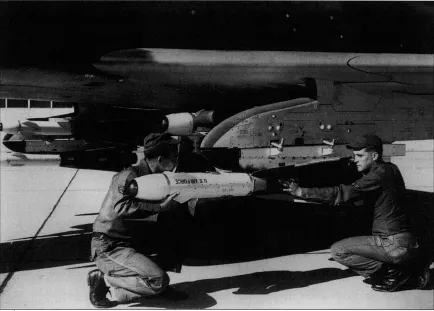
Sidewinder continued to gain momentum during the early 1950s, though McLean intentionally kept the team small and focused. He intentionally kept a low profile, too, making friends where he could and recruiting key bureaucrats to provide cover for the project among a crowded field of guided missile programs. The budget was kept low by the small scale, the tight testing loop (Falcon and Sparrow were not being engineered next door to their test ranges) and judicious use of resources scavenged from wherever they could be found.
The design was simplified and refined. Several approaches to the IR seeker were pursued in parallel, though McLean’s original precessed-gyroscope idea would end up winning out. A thallium damper was added to stabilize the seeker gyro. A rocket body was selected: a proven, standard motor China Lake had developed. The canard shape was refined (McLean had wanted rectangular ones to keep things simple). Rollerons were introduced, passive mechanical control surfaces that consisted of a tab and a disk that was spun by the airstream. If the missile began rolling, the gyro-stabilized tabs would extend to bring the vehicle under control, providing roll control without the need for the complex electronics used in other missiles.
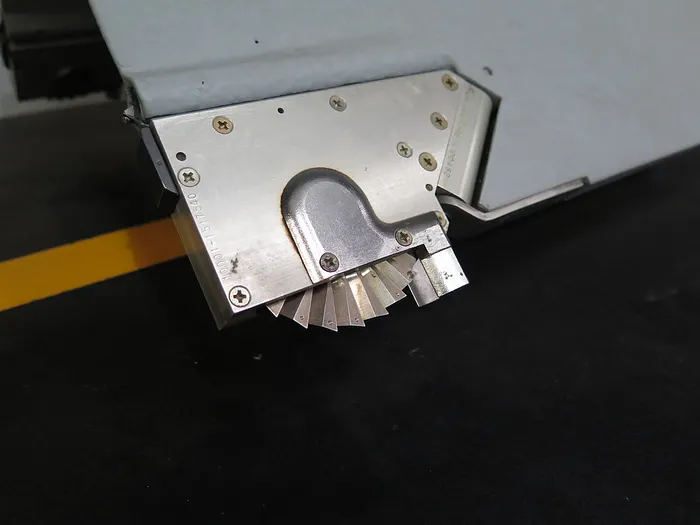
The entire system was incredibly elegant:
The pistons that moved the aerodynamic controls were also the solenoid that actuated the valves on the pistons that controlled the gas pressure on the pistons… The use of high-pressure gas from a piece of burning rocket propellant–like material spun a gas turbine at 60,000 rpm to generate the electrical power needed, and also provided the motive power to operate the canards. The cylinders containing the pistons doubled, probably, as structural elements, etc. The infrared radiation collection mirror was also part of the spinning gyro, as was a permanent magnet that was also the rotor of the “motor” that spun the gyro. The magnet was also the element by which forces were applied electromagnetically, to turn the mirror/telescope, so as to track the target.12
Testing was another matter. There were few ways around the need for jets, target drones, and test pilots, which the Sidewinder team struggled to obtain with their limited funding and clout. Initial tests attempted to validate the design by tracking the sun. Over time, however, McLean’s connections, creative scrounging, and technical success brought them more resources.
Thankfully, the self-contained nature of Sidewinder meant it could be easily mounted onto old aircraft like propeller-driven Skyraiders and a variety of obsolete jets the team worked with initially. They did not have access to a supersonic testbed until 1955. But their test pilots were excellent; they believed in Sidewinder just as much as the engineers, and worked closely with the development team. Feedback from initial tests resulted in the development of the famous helmet tone indicating the strength of the lock from the seeker, which replaced a visual voltmeter in the cockpit. And the Navy test pilots that Sidewinder used would rotate back to active duty to sing the praises of the new system in the fleet.
Test culture in the 1950s was, shall we say, more casual. Telemetry was primitive. Test pilots would lock on to Greyhounds and locomotives to verify that the IR seeker was working. Some would go out of their way to get everyone up at 5 A.M., tapping their afterburners as they roared overhead on their way in for the day. The Sidewinders could pull an aircraft out of control if they fired without seperating, and on one occasion Walter Schirra (later commander of Apollo 7) found himself desperately evading a missile he’d just fired, which was flying in a series of violent loops.
During later high-altitude testing for the Air Force, test pilots found that their high performance F-100s would often stall as the compressor ingested debris from the missile exhaust. One, Glenn Tierney, would habitually shut down his engine before firing. Sometimes the engine could not be restarted without pulling the plane into a dive to power its ram air turbine. Tierney nearly died during one test after his helmet failed to pressurize and his engine stalled; his plane fell into a spin while he was incapitated by severe hypoxia. He managed to get the F-100 under control at a lower altitude and land safely despite a failed drag chute. Testing of the AIM-9D during 1964 involved a pilot nearly firing a missile at an airliner coming in for approach at LAX; disaster was only avoided because he remembered, after locking on, his commander stressing that targets must be visually identified.
By 1953 Sidewinder was growing more mature, which meant a higher profile and stiff resistance from many in Washington, who felt the free-wheeling nature of China Lake’s development was unserious. Getting infrared to work at all was still an open question. But after overcoming one final issue, the team managed to get a Sidewinder to miss a target drone by just one foot. The celebrations at China Lake were racouous: the successful test had come just in time to buy them some breathing room. In 1954 they managed to shoot down a B-17 drone. The footage of that test would finally put paid to the harshest critics, and once again it arrived just in time - days before, a telegram had arrived from Washington: “Stop all work on Sidewinder: It has been proven that an infrared homing system will never work.”13
By now the design was having its finishing touches applied. Attention was paid to ease of assembly and robustness to handling on the deck of a carrier. China Lake personnel deployed to carriers and worked closely with Navy personnel to work out every detail of how the missiles would be used in service. Simulated catapult launches and arrested recoveries were carried out. Guidance issues were ironed out, including a redesign of the gyro bearing which was carried out in secret from McLean initially, as the engineers knew he would disapprove of the complexity of the change. The design was frozen in 1955 and production missiles were introduced to the fleet in 1956.
This was, however, far from the end of Sidewinder’s story. Though the initial deployment in Taiwan was successful, the Soviets of course soon had their own copy of the design, and high failure rates continued to haunt the early Sidewinders throughout Vietnam. Though pilots preferred Sidewinders, to the point of performing unauthorized refits of their Phantoms to carry them, 47% of all Sidewinders fired during the war failed (compared with 66% of Sparrows)14. China Lake had taken a relatively hands-off approach to early mass production, but the contractors engaged to do the job were running dirty and chaotic factories that turned out a high proportion of duds. but And the lack of all-aspect capability remained a problem - early Sidewinders had a limited firing envelope that could not always be achieved by pilots in the thick of combat. Finally there was the battle to get the Air Force to accept a Navy weapon, which would be prosecuted in an extended series of tests throughout the late 1950s.
Over time and many variants these issues were worked out. China Lake intervened to whip production into shape, and the Air Force came to appreciate Sidewinder. In 1977 the AIM-9L arrived with a much more sensitive actively cooled seeker and (finally) all-aspect capability. In 2003 the AIM-9X was introduced (by this point being developed by Hughes Electronics), and is still in service; the 9X finally left behind the classic IR seeker for digital electronics and a charge-coupled device - basically a thermal camera, with software used to discern the target. Today’s Sidewinders have thrust vectoring, helmet-mounted cueing, and can lock on after being dropped from a stealth fighter’s internal weapons bay. But almost eighty years after that original notebook sketch, McLean’s missile lives on.
What about China Lake? McLean retired as technical director in 1967 after serving since 1954. By the early 1970s you can literally watch the Singularity being cancelled: as Westrum puts it, “things began changing in 1974 when Rear Adm. Rowland “Doc” Freeman arrived as commander.”15 Higher-ups keen to rein in China Lake and get it following protocol prevailed, and the generation of men who had come up during the war years retired. The workshops were filled with cubicles. There was still some dynamism and the people of China Lake continued to be dedicated and hardworking, but there were no more Sidewinders.
So far so descriptive. We’re left with the question:
Why did China Lake work?
It would be trite to say that China Lake in its heyday was “like a startup”. Of course there are similarities; the necessary conditions were all there. They worked hard. They were constantly testing in a tight loop. There was the obsession with simplicity, with deleting parts, with building a system designed for mass production. They kept close relationships with their users, from test pilots to fleet technicians, and incorporated their feedback. Everyone bought in to the shared culture and believed in the mission. Recruitment was done by top technical staff. They were a small team with a flat hierarchy and a single leader who owned every part of the project - a leader who led not by fiat or requirement but because going to him was the fastest way to solve a problem. Most of all McLean’s careful brainstorming meant they had chosen the right problem; in comparison, the semi-active Falcon and Sparrow were fighting uphill from the beginning.
Of course there was some luck involved:
I had just soldered the last two connections on the phase discriminator . . . and I had never turned it on. I looked up to see someone walking in the door with an escort. This was the missile czar being sent by Charlie Wilson [secretary of defense] to examine what we were doing.
I looked at the guy, and I was really intent on what I was doing, and he was smoking a cigarette. And I said, “May I have that please,” and he thought I didn’t like the smoke. He gave me the cigarette, because he couldn’t see an ashtray. I cranked on the power, and I opened up the gas to run the servo and I began to move the cigarette in a circle. And the gyro moved in a circle. And the fins moved up and down and sideways, as this thing went around in a circle. And he didn’t notice—although I did—that the fins were going down when they should have been going up, and they were going left when they should have been going right. They were exactly 180 degrees out of phase, which meant I had soldered the wires of the phase discriminator backward.
Nevertheless, he was watching the cigarette. He said, “Make it go up and down, and make it go left and right.” Only up and down fins worked, or only the right and left fins worked, or they all worked together in a circle. His next question was “How much money do you need to make it fly?”16
But what I found more interesting in this book were the ways that China Lake differed from something like, say, SpaceX. The most striking point is community.
I think an underrated reason for SpaceX’s success is Kwajalein. Way back in the early 2000s during the development of Falcon 1, SpaceX found it too difficult to work with the Air Force to do their test launches out of their facilities in California. So Elon decided to pivot and move Falcon 1 launch operations to Kwajalein atoll in the middle of the Pacific - a tiny island chain owned by the US Army and used in the past for ballistic missile testing. Kwaj basically saved SpaceX, in my opinion17 - the isolation let them move as fast as they wanted to without worrying about regulatory scrutiny. But it also meant that the early SpaceX team was forced to live together on this tiny island and cook, sleep, watch movies, and generally live with each other through adversity for months at a time. This was another level beyond sharing a crappy flat with bunk beds. SpaceX at this stage was far more of a “tribe” than other firms.
China Lake was like this dialled up to 11. Everyone was in the middle of the Mojave desert, and unlike Kwaj, everything was in the desert, four hours from LA. People lived there, right next to the design offices, the drawing boards and the workshops, which was all right next to the test range and airfield. This was the 1950s; there was nothing else to do. Well, actually, there was, because everyone had families with them. You weren’t sleeping at the office because you could drive a few minutes home and go to sleep in a big bed with your wife. The wives supported a thriving social scene - everyone knew each other, the social context was nicely Dunbar-sized, and there were constant dinners, barbeques, and parties. Work flowed seamlessly from the lab and the office to sitting rooms with kids running around underfoot. McLean’s wife, LaVerne McLean, led this side of China Lake just as successfully as her husband ran the technical laboratories.
Of course this wasn’t for everyone. Women were still shut out of technical work at this point, and many people came to China Lake and quickly left when they couldn’t adapt to the culture. But I was also struck by the way that China Lake charachters tended to either leave immediately or stay and build an extremely long career. SpaceX tends to burn people out pretty quickly; most of the original leadership have left by now. But China Lake doesn’t seem to have had the same effect. McLean wasn’t as abusive as Elon, but I can’t help but feel that this incredibly thick sense of community was the main explanation.
It was also a little surprising to find that the differences introduced by the 1950s government context were mostly superficial. Rather than funding runway, the Sidewinder team was galvanized by constant threats of termination by distant bureaucrats in Washington, as well as the demands of the Korean and Vietnam wars. Outreach was not to a wide base of consumers but a matter of courting key figures and impressing test pilots, who would then do your marketing for you. Other than the fact that China Lake had to do more negotiation with institutions, especially around testing, these problems basically seem like the same shape as many modern, private-sector ones.
The main difference here seems to be the focus on “secret” or “illegal” projects. Several of the top staff on Sidewinder, including McLean, speak positively about these sorts of personal projects that are carried out under the table without official sanction. You can quit your job at Google and start developing SaaS from your bedroom; you can’t do the same with guided missiles. 1950s institutions were ones that could be worked on from inside; if you came up with a project and managed to validate the concept, you could quickly gather an informal team and get political buy-in. Senior management had less visibility, so these personal projects could get further along before receiving the “hug of death” in attention, personnel, and funding that charachterized Sparrow and Falcon.
Mission-wise, it was interesting to note that little overt patriotism makes it into Westrum’s narrative. When it’s mentioned at all the goal of the engineers seems to be to save the lives of pilots or simply build an excellent missile for its own sake. This is likely because the attitude was simply the water everyone in China Lake was swimming in, but these were not bloodthirsty or aggressive people.
The World War II generation is also key here. McLean and his colleagues came into their own during the war years in an incredibly hectic and creative environment, when everything was suspended and budgetary concerns took a back seat to speed. It seems clear from Sidewinder that the war produced not just a bevy of technology but also a generation of people who carried this attitude into peacetime developments, with impressive results. How large of a factor was this in the sudden shift we see in so many areas in the early 1970s, right around when this generation was retiring? For China Lake itself, it seems pretty clear cut.
It’s also not clear if China Lake could have been sustained for longer. Reading about the decline period I wondered about the Skunk Works, where Kelly Johnson (of WW2 pedigree) successfully handed over the reins to Ben Rich; the Skunk Works remained highly dynamic into the early 2000s, following up the SR-71 with the F-117, the B-2, and work on the F-22. I think the Skunk Works kept its mojo for a few reasons. Firstly, they were a division of a private company; this meant they were insulated from government interference to an extent, and also that they were considered a golden goose rather than renegades. Secondly, Johnson was more disagreeable and more concerned with succession than McLean. Finally, they had a clear project and mission that emerged right around the end of Johnson’s tenure - stealth - that Rich could take up and continue.
In Athens Plato once taught that at the end of time all things will return again to where they once were18. Today, the sun seems to be setting on the instrument of expansion that were the great legacy primes, as well as the air-to-air era of knife fights that Sidewinder dominated. Weird projects are still pursued by hard-working, brilliant teams at government labs, but overall progress is no longer the breakneck dash it was for those brief decades after Trinity. It’s really worth reading this book in full; there’s a wealth of technical detail and anecdotes I simply couldn’t squeeze into this summary. But it’s also worth remembering what that progress looked like, and what it felt like to be there, singing songs on someone’s roof in the middle of the Mojave after a successful test. May it come around again.
Ch. 14, “Early Generations”.
↩Ch. 2, “The Gadgeteer”.
↩Ch. 2, “The Gadgeteer”.
↩Ch. 2, “The Gadgeteer”.
↩Ch. 2, “The Gadgeteer”.
↩Who you may remember from hits like developing the proximity fuse and being the guy who crawled into the bomb bay of the Enola Gay to arm Little Boy on the way to Hiroshima.
↩Ch. 3, “The Problem Takes Shape”.
↩In fact, a previous attempt at building a guided missile at China Lake had crashed and burned in the recent past.
↩Ch. 11, “Selling the Air Force”.
↩Olds, Robin. (2010) Fighter Pilot: The Memoirs of Legendary Ace Robin Olds, p. 314.
↩Ch. 7, “Systems Engineering”.
↩Ch. 6, “The Weapons Shop”.
↩Ch. 9, “Crunch Time”.
↩Ch. 16, “In Combat”.
↩Ch. 14, “Early Generations”.
↩Ch. 6, “The Weapons Shop”.
↩Even though there were plenty of problems it introduced, like the famous incident where the fourth Falcon 1 imploded en route to the island inside a US military transport aircraft.
↩Borges called it “Fictions”, so it must be true.
↩