Review: Yunnan
Good mushrooms and bad wages
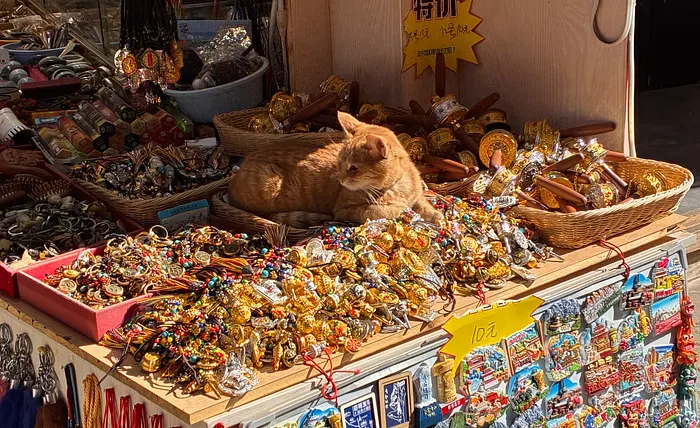
Seagulls are a big deal in Yunnan. Every winter clouds of Siberian gulls descend upon Dianchi Lake to escape the ice at home; ten minutes on the promenade there and you start wondering why they ever head back. Equally large flocks of tourists throng the lakefront, which has been purpose-built to accommodate seagulls, to buy cornbread from hawkers and be photographed as it disappears down gull gullets. Wander further down, though, and the crowd thins out until you find yourself among aspiring influencers. Young men and women in costumes of every description singing, the gulls wheeling behind them, in front of robotic carts dripping with electronics that cruise back and forth over the paving stones, following their charges’ every move.
That promenade was the China I saw. The Han tourists from every province, the great works, the mundanity and splendour. The electronics raised in process nodes beyond the understanding of any single man and the struggle to wring out one more follower, one more yuan to keep it all going one more day.
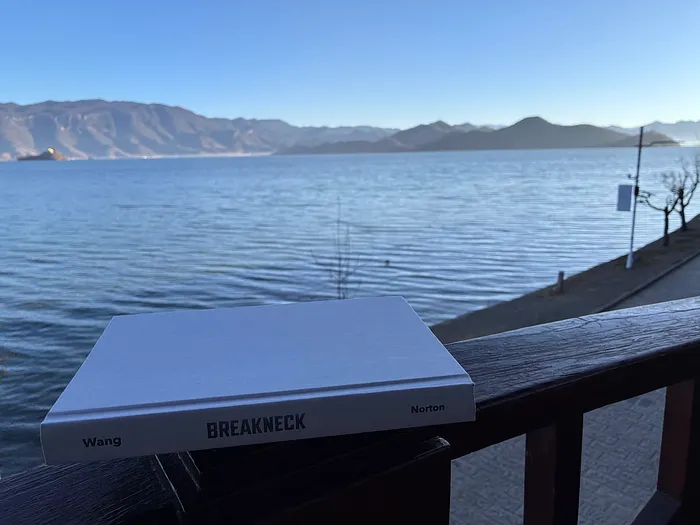
With nothing better to do and a copy of Breakneck in hand, I headed over for a couple of weeks during the new year, most of that in Yunnan. I spent a little time in Kunming, but mostly travelled around the northern parts of the province - Dali, Lijiang, Shangri-La. I can’t speak for the south, but Dali was my favourite city that I visited. The setting is beautiful. On calm, sunny days the lake shines like a crucible of molten gold poured into the mountains. It’s got this laid-back attitude I didn’t find elsewhere in China, and it also seemed to have a thicker culture without feeling rural. People call it “Dalifornia” - I guess I need to visit actual California now.
But Yunnan is also in flux in a way that places in the West just aren’t. The province I visited was a very different place than the one Dan Wang described in his 2022 letter.
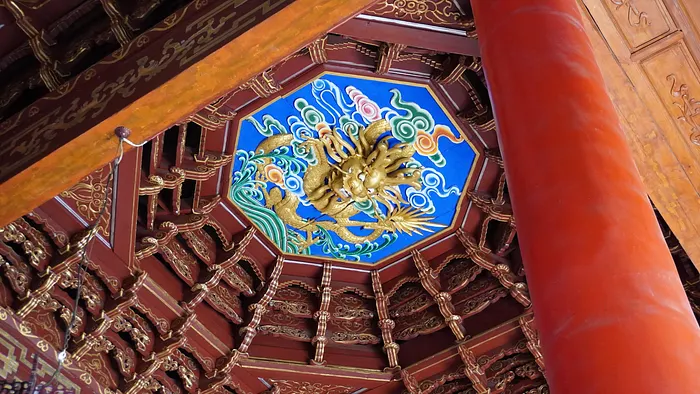
As recently as the 2000s, Yunnan was a wild place. During the Ming dynasty, the Mu family installed a five-fingered water dragon mural on the ceiling of their main hall: a capital offence for a typical regional administrator, but the Ming needed a deputy they could trust in impenetrable Yunnan. So the Mu, who ruled from Lijiang, were able to argue that while the five-fingered sky dragon was obviously exclusive to the Son of Heaven, they needed their water dragon to protect their city of wooden buildings.

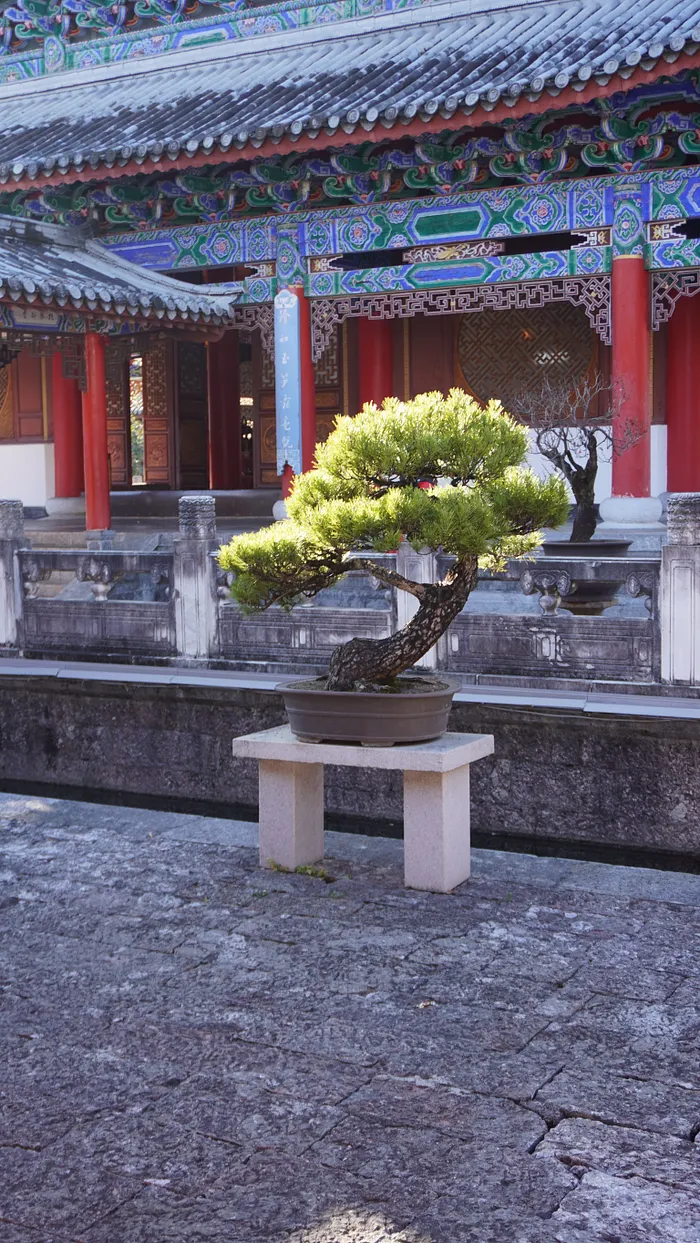
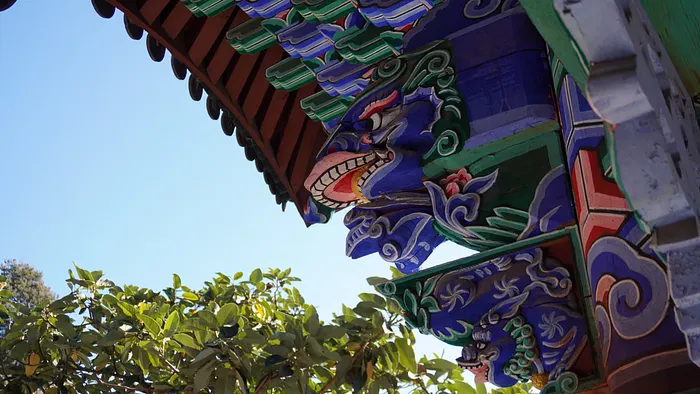
Its hinterlands have always been one of the last places to be touched by the currents at the centre of the Han empire, and this was true for development as well. But development did not just bring wealth to its local peoples; for the first time, the imperial core has the resources to attempt dominance of the province rather than compromise. Compared to Hangzhou, Yunnan is still sleepy and provincial. Security guards are more lax, and the pace of life is clearly slower. Its character is far from erased, but you can also feel where the wind is blowing.
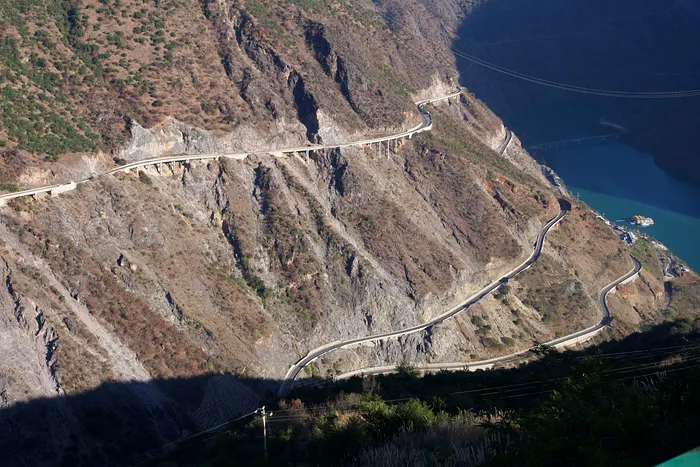
Driving out from Lijiang and into the mountains you wend your way past cyclopean cuttings, the cliff sides buttressed by huge concrete supports. You soar over valleys on viaducts. And where the road has no alternative you dive through mountains in tunnels that seem to go on forever.
Places that would have involved torturous trips along narrow roads over mountain passes and down valleys to reach just a decade ago are now a relaxing highway cruise. Travel times are cut by an order of magnitude with each new road link. Lugu Lake, once practically inaccessible to anyone other than the most intrepid backpackers, is now just a few hours from Lijiang. There’s a new road under construction that will cut that to an hour. At Lugu itself, there’s a frenzy of construction as developers race to erect dozens of tourist hotels in anticipation of the new road. Lijiang’s only heavy industry of note is a concrete plant huddled against a mountainside, whose products presumably feed the rapacious expansion of these hotels and resorts.
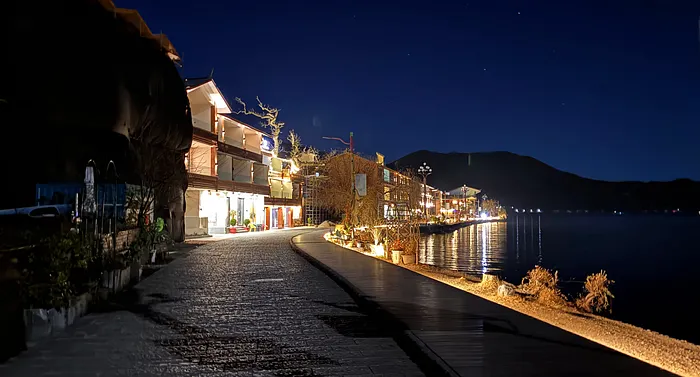
The whole area is well on its way to becoming a tourist trap: most of the Mosuo people now live across the border in Sichuan, existing on the edge of Han society, and the lakefront is a boardwalk that could be anywhere in the world.
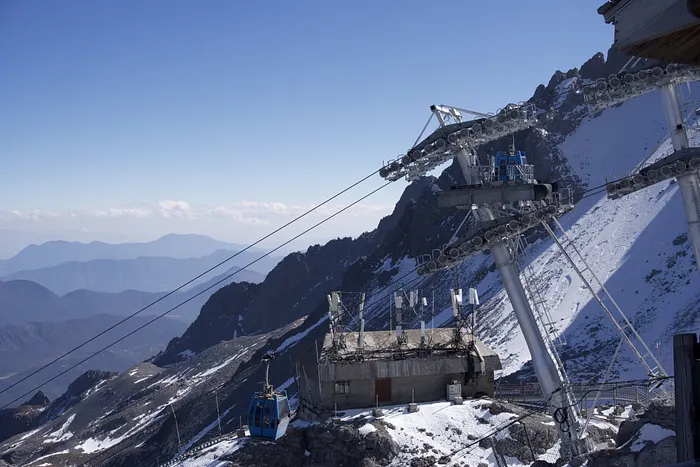
Tourism is a major factor because unlike most provinces, the development is not really about building a manufacturing base. Instead it’s a mixture of the government being willing to spend money for the sake of making the hinterlands accessible and opening up remote areas to Han tourists from the rest of China. I think the CCP understands to some extent that tourism is able to accomplish what dozens of Imperial armies could not. When Xi visited Dali in 2015, his main criticism had to do with the environmental degradation of the lake. Now cities like Lijiang are increasingly tourist towns, staging areas for activities in the surrounding countryside, like the gondola up Yulong Snow Mountain and a newly constructed tourist railway.
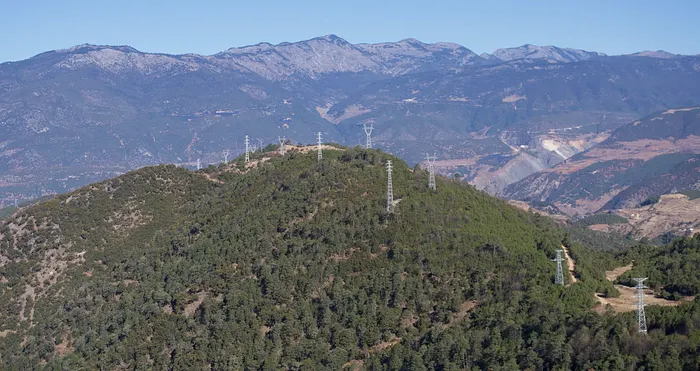
Power lines and 5G antennae march toward the horizon, heedless of terrain. High-speed trains connect Kunming with even the most northern cities, where Yunnan rumples as it runs into the foothills of the Himalayas and blends into Tibet. Taking the train from Shangri-La to Kunming was an awe-inspiring experience: the route feels like half its distance is tunnelled and another quarter is built on viaducts. I couldn’t stop thinking that somebody had to pay for all this. Many of the locals that you talk to are very positive about the central government which has given them such fantastic infrastructure, though of course without thinking about how it’s been subsidised by others and their own future. Most of the major roads are recent, having been completed in the last seven or eight years.
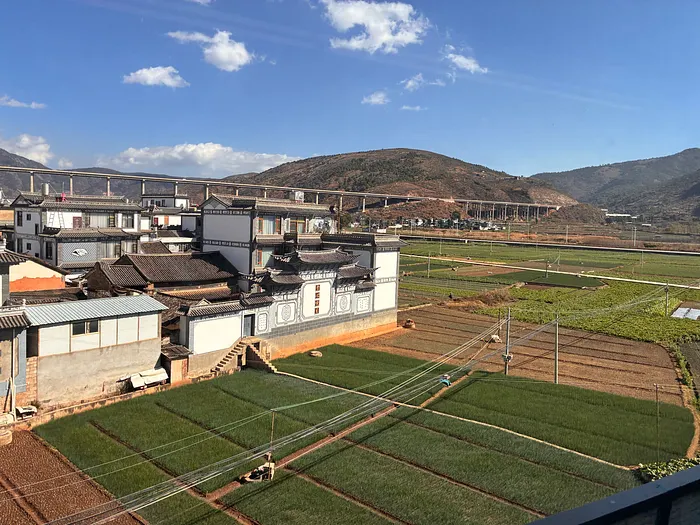
In some ways this development has been good, of course. I’m thinking about these villages tucked away high in the mountains, with terraced fields cut out of sheer slopes and the basins of passes given over to agriculture. In some ways, their life isn’t so bad; for now, the area seems like one of the best to be a farmer in. The scenery is wonderful and the government far away. They’ve got clear, cold mountain air and meltwater straight from the source. New BYDs and old Wulings. Electricity, 5G, and a solar hot water tank on every roof. Rice noodles and tender mushrooms in spicy broth. Their houses are attractive, white and red walls topped by tiled rooves with upturned corners. Larger ones boast courtyards behind beautifully carved wooden gates, the insets depicting the life of the steppe and mountain. And the highways, for better or worse.
Travelling through the area, I found myself thinking that this was the world degrowthers want to return to in its idealised case. But reality intrudes here in a way it doesn’t online. The villages are still visibly poor, rough around the edges, and the people are bent-backed with tanned and lined faces. By the standards of rural peasants these people are rich, but their lives are nevertheless hard.
The mushrooms, however, were just as good as I was expecting.
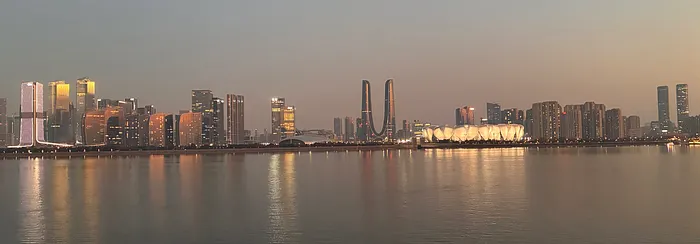
I also spent a few days in Hangzhou, a city of contrasts. I’ve barely seen any of China, but I feel like it’d be on my shortlist of places to live if I ever did move there. It has this mixture of high-tech cyberpunk economic dynamism and boomer tranquility with West Lake and its incredibly deep history. The city itself is full of stressed-looking people hustling about, traffic jams of BMWs, and monolithic skyscrapers. The buildings do light up after dark, but the patterns are schizophrenic, stuttering between different animations in random intervals. At the same time you can head over to the lake during a weekday and find thousands of uncles and aunties ambling back and forth under tree-lined avenues.
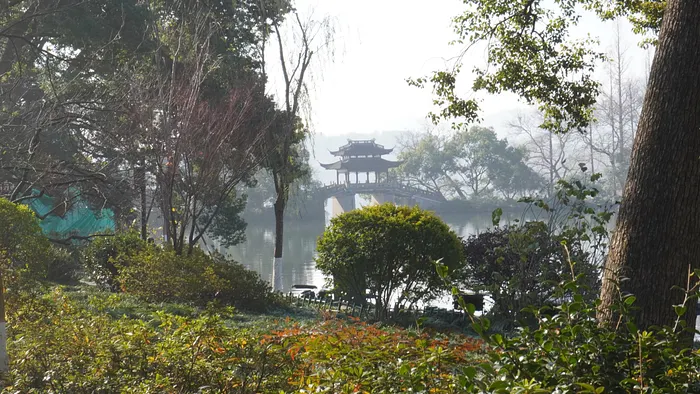
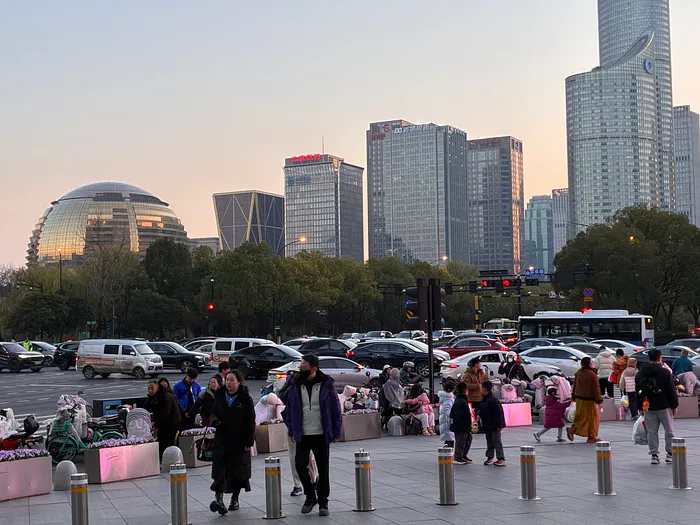
The sheer scale of the economy in these tier 1 cities is staggering. Marco Polo supposedly remarked upon visiting Hangzhou that “the number and wealth of the merchants, and the amount of goods that passed through their hands, was so enormous that no man could form a just estimate thereof”. I agree.
Infrastructure
One of the best things about China from the perspective of a tourist is that you benefit from all the good parts without having to deal with any of the bad parts. You get to use all the high speed trains and subways, stay in the new hotels, buy the cheap goods and services with your foreign currency, and generally be a consumer in a giant market that’s obsessed with artificially pumping supply while suppressing demand. But your savings aren’t being coerced into unproductive investments, you don’t have to work local hours for local wages, you don’t have to compete in the local property market… and you don’t have to live in the cities.
What would my top priority be as a Chinese urbanist? In literal terms it’s a moot point, because of course you have much less control over the way your city is designed as a random citizen in China compared to the West. But it’s a useful to think about, and when I consider the question it brings to mind a bunch of things that are features, not bugs, of Chinese planning.
I think easily the worst feature of Chinese cities are the stroads. China manages to be extremely hostile to pedestrians despite its density. Roads are fast, slightly chaotic, busy at every hour of the day or night, and have few pedestrian crossings. Sometimes these crossings are uncontrolled and require you to assert your will against two lanes of e-scooters and four of traffic (at minimum). It’s like a gym for agency. Sidewalks are poorly maintained and often descend into steep divots or melt away in the path of a driveway. Few people use them; I don’t know if this is a chicken or egg thing, but there seems to be a general preference against walking. Han tourists, for instance, have a hatred of walking bordering on a vendetta. Every single attraction has little electric buses shuttling people around. The guides will look at you like you’re insane if you tell them you’re planning on walking for more than a few minutes to get somewhere. I think this is another trait shared with Americans.
Anyway, if you zoom out then the urban fabric enabled by the stroads makes a certain kind of sense.
Chinese cities aren’t a dense, continuous object like a European capital, but they aren’t a loose tapestry like an American city either. They’re more like a collection of vast individual units, whether that’s a residential arcology, a mall, or an industrial plant, separated by wide roads so each node can be connected by car. You’re not really meant to walk out your door and wander through the whole city as one unit. I use the word “arcology” deliberately: as a great lover of arcologies, I appreciate many features of Chinese residential developments. They really are worlds unto themselves, with hundreds of homes, their own landscaped parks, all sorts of commercial services, and controlled entrances. Of course we saw how this model can be used by the state in Shanghai during COVID, and I think there was more than a little of this line of thinking when these cities were laid out. It’s all highly legible, as the tech bros would say.
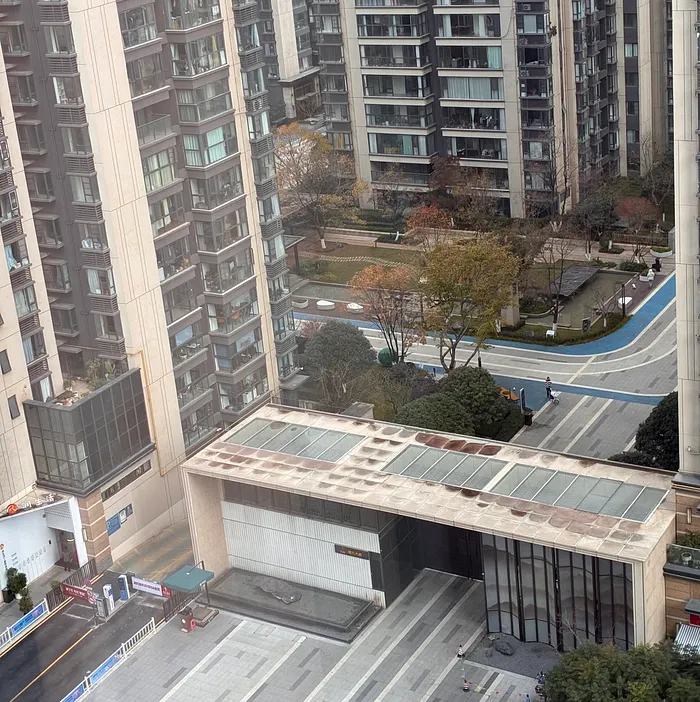
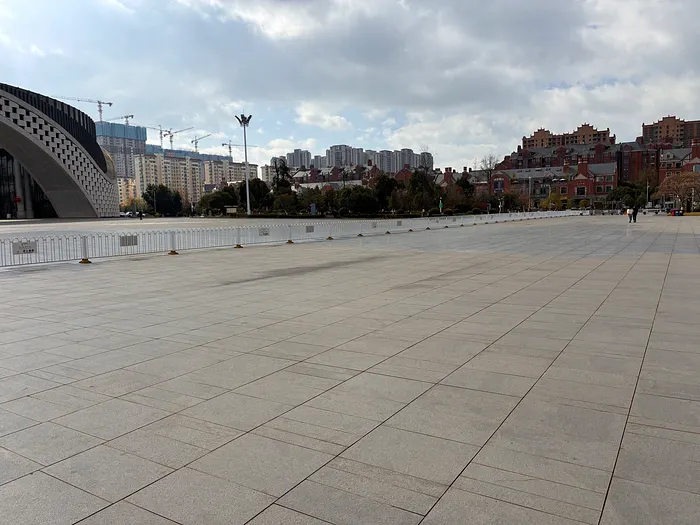
This development pattern does result in a lot of wasted space, though maybe in a more systemic and subtle way than the low-density suburbs of the West. As many have pointed out, these towers-in-the-park arcologies are no denser than mid-rise European housing, and so there is still an enormous underclass in each major city that is pushed out to the fringes and forced to endure torturous commutes. Many public areas are just unpleasant - the centre of Hangzhou is a wasteland, planned from 30,000 feet with enourmous expanses of bare paving to provide sightlines for the government architecture that dominates the area. Commercial activity is relegated to warrens below the surface that locals informed me were designed as a shelter against nuclear attack. The drain gratings apparently double as escape hatches for this eventuality.
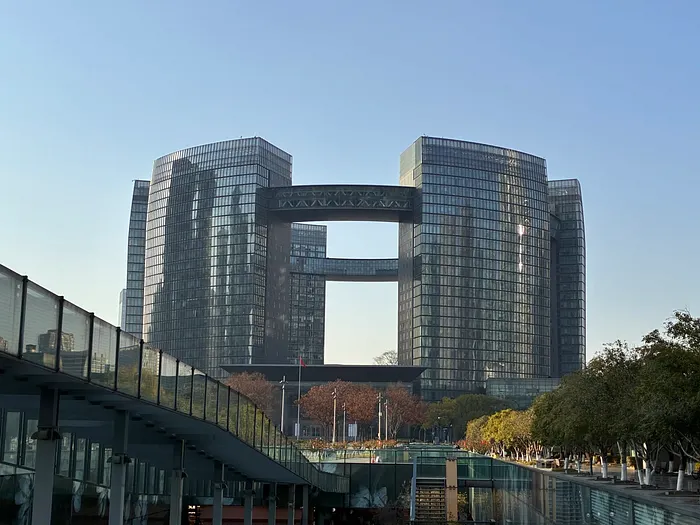
There’s one other glaring omission when it comes to infrastructure. Tap water is not drinkable anywhere, not even downtown Hangzhou. I was really confused by this initially. What happened to their construction expertise, unlimited public works funding, and six thousand years of hydraulic engineering experience?
The top-down stuff is good. They have water treatment plants; the problem is in the pipes that connect those to people’s houses. It seems like they’re bad at this sort of bottom-up work, where you need to impose standards and hold a million different contractors to them. There’s also a huge backlog of older iron pipes you’d need to address to get the water drinkable, and you’re not getting promoted if you spend your tenure as Mayor focusing on renewals.
Another big part of this is the roof tanks. Everyone lives in tall apartment buildings, and in China, most of these use gravity-fed systems. Water is pumped to a roof tank where it waits until someone opens their tap. Long periods sitting in these tanks often makes the water unsafe. So you’d need to address that somehow as well, maybe by replacing the cheap roof tanks with Western style pump-fed systems, or by improving the sanitation and sealing of existing tanks.
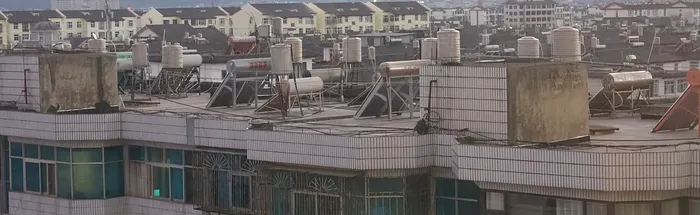
But all of this is a moot point because Chinese people would boil the water even if it was safe. There’s a deep-rooted cultural norm of hot water being superior. This is partly a traditional medicine thing, as TCM emphasises (among other things) balancing hot and cold elements in the body. Hot water and tea were also traditionally upper-class drinks, I think partly because of the extra energy required, and of course there’s the sanitation angle. Both the Republicans and the early CCP ran public health campaigns in the 1940s/1950s to get people to boil their water after realising they didn’t have the resources to do proper water treatment. So don’t expect to be chugging tap water any time soon.
Transport
One of the big questions I had coming into China was how well the EVs were holding up. We know the Chinese EVs are really nice and incredibly cheap, but do they fall apart with long term use? Well, the BYD taxis in Hangzhou get a real thrashing, and they’re doing pretty well. The Chinese environment seems really tough from a reliability perspective, so I’d expect decent long-term results from exports. The interiors on those BYDs were actually doing great compared to their Toyota competitors. They have nice materials that hadn’t scratched, stained, or scuffed. Meanwhile bZ3s, which make up a decent chunk of the Hangzhou taxi fleet, are bare shells inside. It’s all horrible cheap plastic.
This is a small example of a more general trend I noticed. We know that foreign manufacturers are getting their lunch eaten by Chinese cars in the Chinese market. But another layer to this is that the state-owned Chinese manufacturers, like FAW, Saic and Dongfeng, seem like they’re getting their lunch eaten by the private sector. Firms like Leapmotor, Geely, and most of all BYD are just dominating everyone else. SOE cars are noticeably worse (for example, those bZ3s are Toyota badged but made by FAW).
The cost cutting can be pretty insane. I saw EVs where the base trim excludes the rear grab handles above the doors and the rear roof light, though there were recesses for these. Despite this, every car needs to have a giant Ipad welded to the dash, even though everyone just uses their phone in a dash mount anyway.
Speaking of Leapmotor, I was impressed. I already liked them for their commitment to vertical integration and their good strategy internationally, but I was uncertain about their prospects in the domestic market. They seem to be doing pretty well, however. Their mid-range value segment seems to have given them a good foothold. You see about as many Leapmotors in random regional Yunnan cities as in Hangzhou (right next to their HQ). It seems like a better place to be competing than the bottom end, where you get steamrolled by BYD, or the top end, which is brutally overcrowded. But then again, this is like saying they are only being beaten with a baseball bat instead of a hammer.
Leapmotor also stands out because the design of their cars is OK. Many Chinese cars are straight up ugly, with weird Crysis/Alienware 2010s future aesthetics. Design in general seems like a weakness of China’s, whether that’s cars, software, or buildings. I notice that one of the few things they still outsource to Westerners is industrial design - the heads of design for all the major car brands have been poached from Europe.
Chinese people LOVE long wheelbase cars. These are relatively rare in the West, being limousine versions of sedans like top-end BMWs, which are mostly used by executives and officials. The car is a bit longer, which gives you more rear legroom at the expense of weight, cost, handling, and so on. In Western markets the option is usually available only on the largest flagship models like a 7 series or S class. But a majority of the German sedans I saw in China were long wheelbase. I even saw a long wheelbase 3 series, the entry level compact BMW sedan, which apparently is a China-exclusive factory option.
Amap (Chinese Google Maps which Gaode uses) is integrated with the traffic systems, so you can see how long traffic light cycles will take. It’s also worth paying a couple dollars extra for the slightly nicer option, which means you usually get a Hongqi with a nice interior and acres of legroom... because they’re all long wheelbase!
The long wheelbase thing is part of a general trend: you see very few sports cars. People will get the M sport packages on their BMWs, but mostly for clout. It makes sense for a few reasons. You’re buying a car for the status, so you want something with a high purchase price but low operating costs, hence all the C classes with the smallest 2 litre engine. Chinese traffic is terrible, their roads are monitored with draconian enforcement, and petrol is quite expensive relative to income (they import most of their oil, hence the push to EVs). On the other hand, paying for passenger comfort does make some sense, plus long wheelbases are executive-coded and hence higher status.
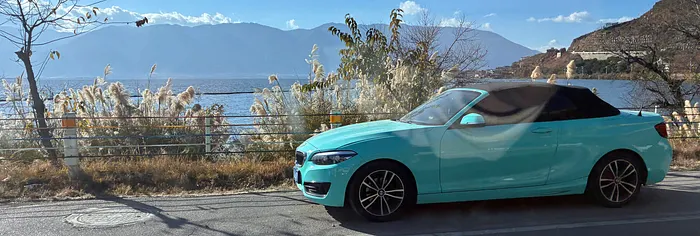
Performance cars are definitely high status, but I don’t think the tradeoffs make sense for the typical buyer. You can see their status peeking through in other places, like on the internet, or on Dali’s lakefront. There’s a booming industry that rents out candy-colored German convertibles for people to take photos with in front of the lake. If you could convince one of these places to rent you a Porsche without the photographer, the mountain roads around Dali could be a good time.
I saw one SU7 Ultra. The owner had covered it in giant ULTRA decals. It was odd to think about all the engineering effort that went into its performance specs, when most of the owners will never use a fraction of those and instead just want it for the clout. Not so different from Ferraris, I suppose.
Speaking of decals, Chinese people love putting these on their cars. They aren’t really like Western bumper stickers, more like decorative stickers you might put on your luggage. Cars in general are definitely treated more like a commodity, even though they’re more expensive to own compared to the West. Older BYDs have the English “BUILD YOUR DREAMS” lettering on the trunk, just like in export markets. I saw one guy who’d replaced that with “BUILD OUR PARTY”.
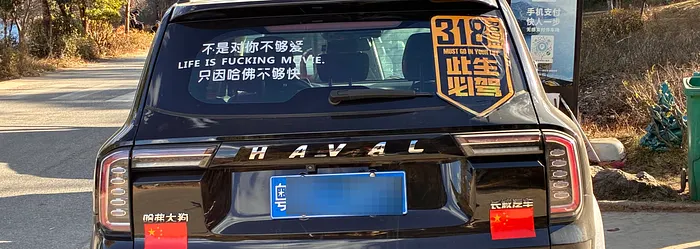
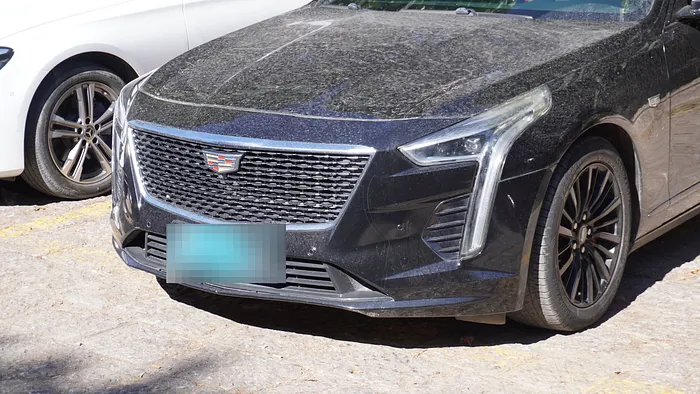
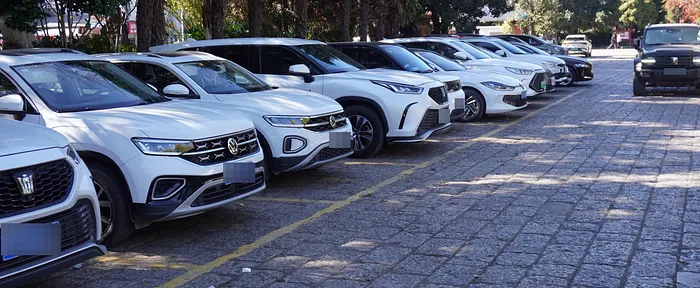
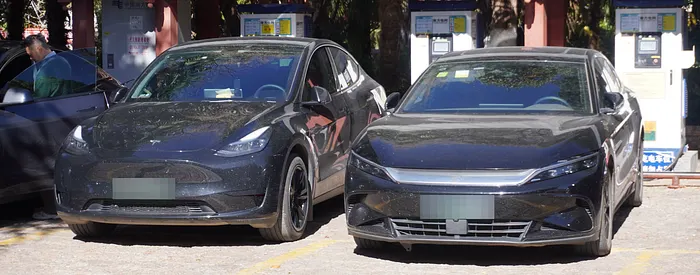
Chinese cars are dominant, but a good chunk of the fleet is still German. Volkswagen’s legacy will take time to dislodge. There are fewer Japanese cars than you’d expect based on the proximity to their market, but that makes sense, not just for nationalistic reasons. Chinese people simply couldn’t afford cars during the golden age of the Japanese auto industry. I noticed more American cars than I was expecting, especially Cadillacs, which seem to have some status. There are of course plenty of Teslas. The most unusual models I spotted were a E39 5 series in a random mountain village near Lijiang, and a Dodge Charger on the way back from Shangri-La of all places.
Even though the traffic can be a bit chaotic in major cities, mostly due to conflicts between electric mopeds and cars, I saw very few actual accidents. People will definitely change lanes aggressively and the horn is more of a method of communication than expression of anger like it is in the West. This is not hardcore second-world traffic; it feels like a halfway point between that and a Western country. I also saw almost zero ambulances, which I assume is not just a reflection of the incredible haleness of the Chinese population. It’s easy to take so many of these things for granted.
OK, enough about cars, we need to talk about electric scooters. Every Chinese city has an enormous number of these electric mopeds, and I think they’re more important than cars in some ways. Firstly, it’s a huge boon having them all be EVs, much more than upgrading petrol cars to electric drivetrains. Small combustion engines like the ones on mopeds create much more noise and air pollution, and it’s amazing seeing these fleets of scooters rush past you in total silence (except for all the honking). This is a huge diffuse benefit for urban dwellers that you’ll viscerally understand if you’ve been to any city in India or Southeast Asia.
Secondly, there are way more mopeds than EVs. All the scooters share a supply chain - they use standard sizes of hub motors, disc brakes, tyres, wheels, switchgear, suspension and so on - meaning they are very affordable. This supply of cheap, clean mobility is massive for lower-income Chinese people who wouldn’t be able to afford a car anyway. It’s not just about rural peasants moving to the cities. University students and shopkeepers have a whole new dimension of independent mobility unlocked by these, rather than having to rely on the packed subways which are mostly commuter machines anyway.
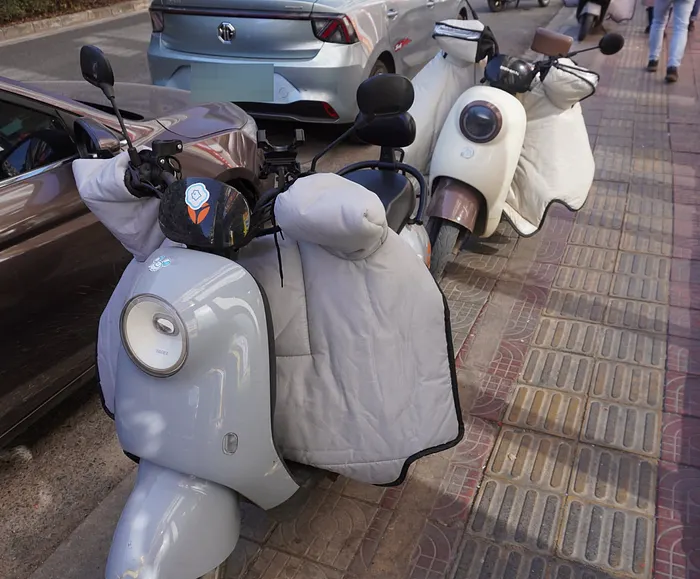
But there is also a significant chunk of the urban population whose profession is driving these scooters around. These people are pushed to their limits hustling to deliver things as fast as physically possible and live on pittances. There’s a good and bad side to this: it’s a genuine pathway into the cities for some rural dwellers, and it’s also better than starving or hard farm labor, but not by that much. It seems easy to get trapped in one of these low-level jobs, with all your time and energy sucked up by it so you can’t move into something better, but only just making enough to stay alive. The long-term prospects are grim.
However, the existence of these people enables some incredible feats of logistics. I have seen some startups in the West like Pipedream Labs talk about ‘hyperlogistics’, a vision of near-instant incremental delivery service that could collapse the barriers between the customer and distribution warehouses. Chinese cities have a sort of beta version of this thanks to their scale and moped fleets. You can get nearly anything you can imagine delivered from an app within about 20 minutes of placing the order. This applies to outbound goods too - there are apps for renting couriers, which can have a parcel across China in a day or two for a nominal fee. Western postal systems are simply a joke in comparison. Being in a tier 1 Chinese city made me feel the vision of hyperlogistics, this sense that the city itself has another nervous system on top of water, power and public transit that shuttles cargo around like red blood cells oxygenating its various organs.
One other consequence of these things is that bicycles, including ebikes, are virtually extinct in urban areas. You’re fighting for your life every second against aggressive e-mopeds that will overtake you in the bike lane at 50-60kph. I saw only a handful of cyclists, all of whom were riding recreational road bikes and seemed like high agency sorts.
I don’t think I have much to say about the public transport that you don’t know already. Yeah, the subways are really nice, they should install platform screen doors on Western metros. Don’t bother buying high-speed train tickets for anything above economy class.
Culture
I knew Chinese food was going to be good. And it is: I understand what Chinese people mean now about Western Chinese restaurants being entirely different from the food you get in China itself. The domestic stuff is much better. I’m not really qualified to give you an opinion on the restaurant food other than that I enjoyed it. But I will note a few things.
Firstly, eating at nice restaurants is a full-spectrum experience in a way it isn’t in the West. The menu is a room with glistening examples of each ingredient or menu item laid out on trays, often with dry-ice smoke drifting over the vegetables. Seafood is kept live in transparent tanks where you can watch chefs take crabs or fish straight from the ‘menu’ to the kitchen. Some of this is because people don’t trust restaurants to cooperate on sanitation the way they do in the West, so the restaurant really wants to signal the freshness and quality of its ingredients. One of the locals I was with followed the chef into the kitchen to make sure he actually used the fresh fish. (After this I watched the chef make fish faces at the remaining occupants of the tank).
Unless you want to only visit Buddhist temples, if you’re coming in as a vegetarian or vegan you may want to get comfortable with offsetting through donations to animal welfare charities. Everything has meat.
I also prefer the communal style of Chinese restaurant meals, where everyone gets a little of each meal. The incremental way you eat and the circular tables are just better for conversation.
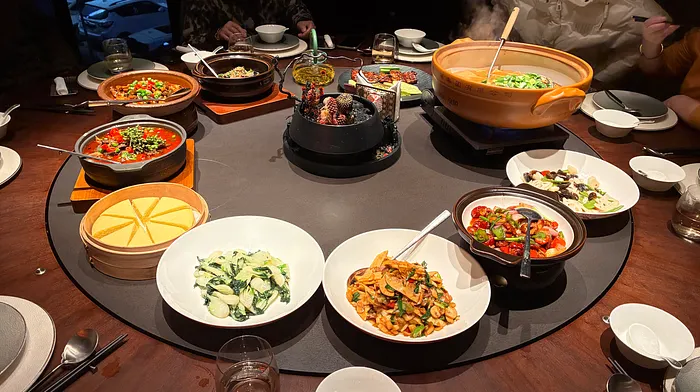
I mentioned I was expecting the restaurant food to be good. But what surprised me was that the biggest quality difference was in low-tier food. Nice Chinese restaurants are great, but their Western equivalents tend to be pretty good too. However, cheap food in China is really delicious in a way it isn’t in the West - things like the noodle shops that construction workers eat at, economy meals on flights, and roadside places in the middle of nowhere. Often the Western equivalents of these are marginally edible nutrient slop. But I had 10 yuan rice noodles outside a random mall in Kunming that were better than many restaurant meals I’ve paid upwards of $20 for in the West. And the meal I got in a China Southern domestic economy seat was genuinely enjoyable. Maybe I just have low standards?
Chains like Dicos, Mixue, and Luckin are higher quality in nearly every way than their Western equivalents at a third of the price. That includes ordering experience, how nice the stores are, and the actual food/drinks.
But China sucks at media. Firstly, the media everyone is consuming is mostly phone-based, and of that, most of it is vertical short form video on platforms like Douyin or Rednote. Some people scroll more traditional social media like Weibo or browse e-commerce sites. Compared to the West, I think I saw significantly fewer people watching TV with their phones in landscape mode, but more people shopping. And of course almost no one is reading books. Shoutout to the guy across from me on the flight to Kunming who was reading a physical, English copy of Zero to One.
What might I say about their popular media? I think it was Dan Wang that called China the most Girardian culture in the world. I agree, but I’d add that it’s the most Baudrillardian culture in the world. We in the West think we’re hot stuff when it comes to hyperreality, but we are just a level 1 goon compared to the level 50 boss that is China. Everything is valued according to its status as a symbol detached from any underlying reality. People are really dedicated to distorting their life for the sake of improving their posting.
The other side to this coin is the incredible energy and dynamism of random Chinese people. I’m sure a lot of this is explained by their pressure-cooker social conditions, but there really is this deep wellspring of commercial hustle and chaotic zeal in the population. Many have made this observation before, but I was still struck by the contrast between sterile central planning at the large scale and exuberant anarchy at the small. There’s strong pressure to get things done, to keep moving. Hangzhou felt like being in a cage with a shark. You can almost taste the cortisol in the air.
Anyway, short form video is dominant, and it’s just as slopified as it is in the West. One question I had coming into China was how to reconcile the work culture with the success of these platforms. When do people find time to doomscroll? A couple of answers: firstly, I think Chinese usage patterns are more like filling in spare moments rather than bingeing the way many Westerners do. Secondly, because of the economic conditions, there are a lot of jobs where people are hanging around for long hours. Many tourist attractions will have a security checkpoint where they scan your bags, and the guys at some of these were blatantly watching short form video on their phones instead of looking at the scanner. Retail stores are open really late - often past 10pm - to try and squeeze out a few more customers. The staff spend a lot of this time on Douyin. People in urban areas also often have really long subway commutes because they’re forced to live in distant suburbs due to housing prices.
Other media is not very good. TV and movies are dominated by mass-produced, low-budget and formulaic junk. Sappy romances, court-intrigue historical dramas, WW2 or Korean War combat, xianxia, that sort of thing. The way Japanese people are depicted in these dramas can be pretty funny - like Nazis in low budget Western WW2 movies. But there’s also an angle to it where they’re painting Japanese people in general as evil, not just the IJA.
CCTV - state TV - was worse than I was expecting. It seems like nobody watches this except for boomers. The news segments seem really low budget, like they were produced by a country with half the GDP per capita. They seem designed by engineers to deliver a message with the lowest BOM cost. The effects are cheap, and the studio lighting makes the anchors look half-dead.
I saw a surprising amount of news segments on UN business and domestic EU items, and one about Avatar 3 that featured shots of standing ovations (it was the third item on the morning news). There’s also a weather program that covers all of China at the provincial level. What is the point of this? It’s like an EU weather program that tells you it will be warm in Germany today.
The ads were another surprise. I’d estimate about 70 percent of TV ads are for spirits, cooking oil, or health scams, and they’re very repetitive - you often get the same ad practically back to back. And I mean it when I say scam. One example was a herbal pill that claimed to cure diabetes. There’s plenty of this stuff which is clearly aimed at ripping off old people but is somehow broadcast on the main state TV channels? What?
By far the best part of Chinese TV are the documentary programs on science and technology. There’s a channel that plays these nonstop, and I watched good stuff on their space program, fusion tokamak, fission plant construction, and so on. Particular shoutout to one that focused on the recovery ops they run in the Gobi for returning Shenzhou capsules. Of course it has a propaganda slant, but it was still genuinely interesting. Some of the high speed trains have ceiling mounted TVs that play these sorts of segments - I saw one on carrier ops and a longer one on the air fryer they installed in their space station.
There are brighter spots. Yunnan’s museums are usually great because they’re working with good material. One thing I wasn’t expecting was that Yunnan is also a hotspot for dinosaur fossils and really early life forms - apparently it was one of the few places life survived in during one of the early mass extinctions. So the Yunnan provincial museum literally starts from first principles, taking you through the formation of the planet and the origins of life, then the area’s dinosaurs, then early Man, and finally into the shadowed depths of Chinese history. It’s pretty cool.
But big Chinese museums have two main problems. Firstly, there is a nosedive in quality as soon as you enter the 20th century, because all of a sudden every exhibit is propaganda slop full of word salad about class struggle and working patriots or whatever. It’s jarring to go from detailed, neutral accounts of late dynastic life to... that. I will say it’s interesting to do once, just to see how an ideologically alien society presents its own history.
Secondly, the descriptions of artifacts are often awful. You can get little smartphone things that detect your location and play English audio about what you’re looking at, which is cool, but the narration is terrible. This is because every single artifact will have about a minute of text upfront that gives you a literal description of what you are looking at before listing every quantitative statistic the custodians could come up with, beginning with its exact dimensions in centimetres. I don’t know who this is for! And it’s not a quirk of the English translations either; if you read the Chinese placards on each item they’re saying the same things. I guess you can just skim it when it’s printed out, but plenty of Chinese tourists were using the narration too.
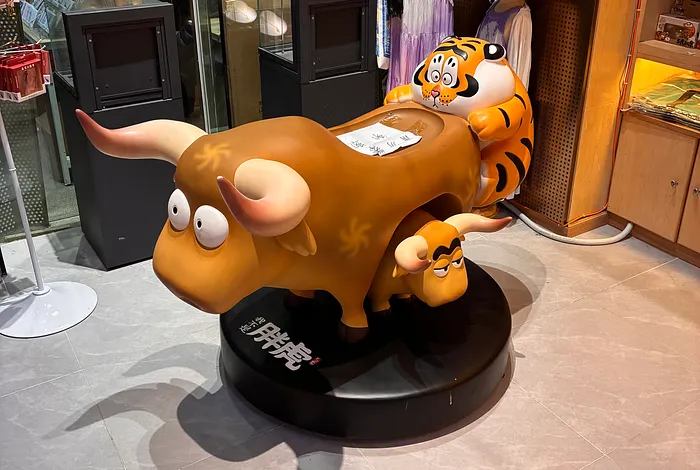
Yunnan provincial museum also felt a bit more... developed than some Western ones. This is good and bad - bad in that you basically need to go through airport security to enter it (not unusual for Chinese tourist attractions, though) and good in that you can rent AR glasses to see cool renders and extra information on the exhibits. The gift shop was also really good. It had genuinely nice things to buy, including my favourite souvenir, a chibi version of a famous bronze statue from the region.
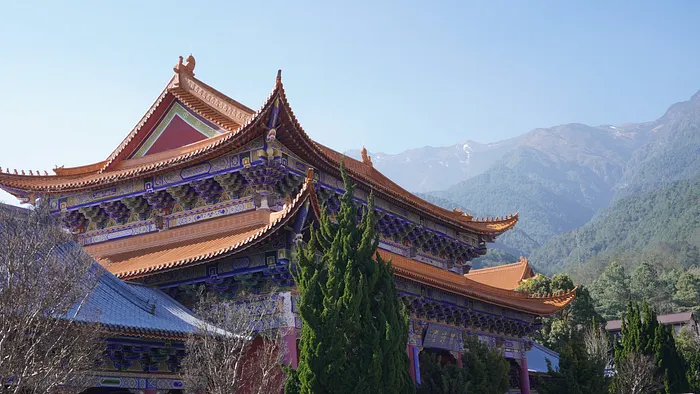
I think China is somewhat more willing than the West to commercialise their heritage, at least in some ways. Old areas have not been preserved just as they were, but usually instead have been restored to their former glory, expanded, and stuffed with random shops. The old quarter in each city is more like a shopping mall than a museum; they still have plenty of commercial activity, which is fitting in a way, but the shops are packed with rack after rack of the same cheap trinkets.
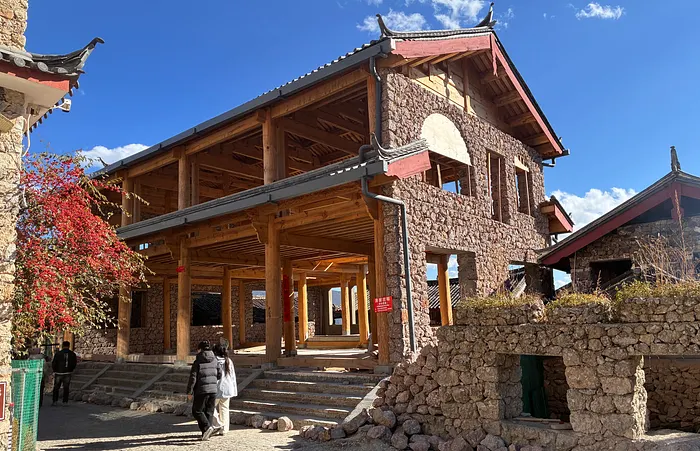
You also notice that all of these places are works in progress. The Chinese aren’t afraid to tear down buildings, gut interiors, or replace doors on structures in historic areas. Coming from the West, it can be surreal to walk through streets with paving stones that are hundreds or thousands of years old that echo to the sound of jackhammers and power drills.
Finally: based on my small sample of taxi drivers, the average Chinese guy thinks about MacArthur and the Korean war a lot. I’m not sure how much those recent blockbusters had to do with this.
I got on OK language-wise, but I will note that Apple translation struggles with Chinese. This includes both translating signs and using the new live translation feature on Airpods. You’ll often just get gibberish, especially if someone is speaking in a local dialect or discussing anything with nuance - their religious beliefs, for instance. If I didn’t have native speakers with me this would have constrained me a lot.
WeChat translation is scarcely better, but it does have one incredibly useful feature: When you use Chinese apps from within it, it can automatically translate the text on the pages for you. Because these are usually simple phrases like “Search”, it’s comprehensible, and this let an uncultured barbarian like myself tap into China’s digital infrastructure. Very useful.
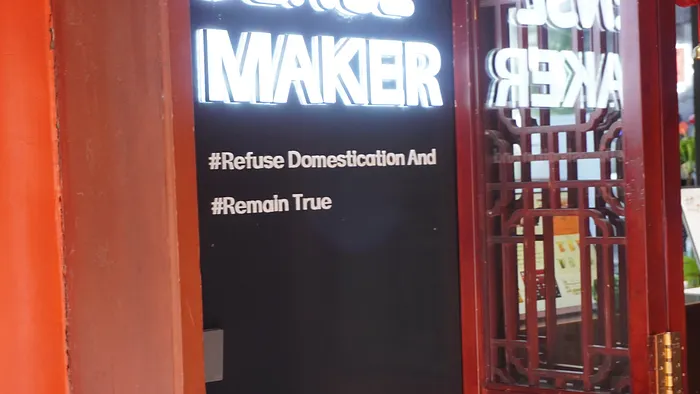
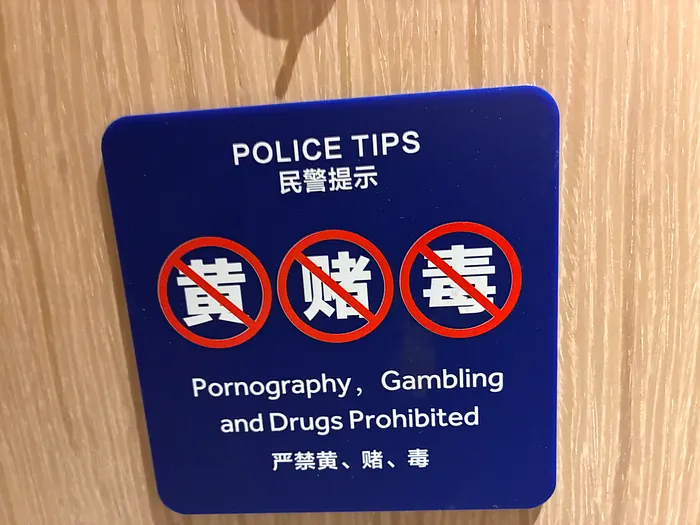
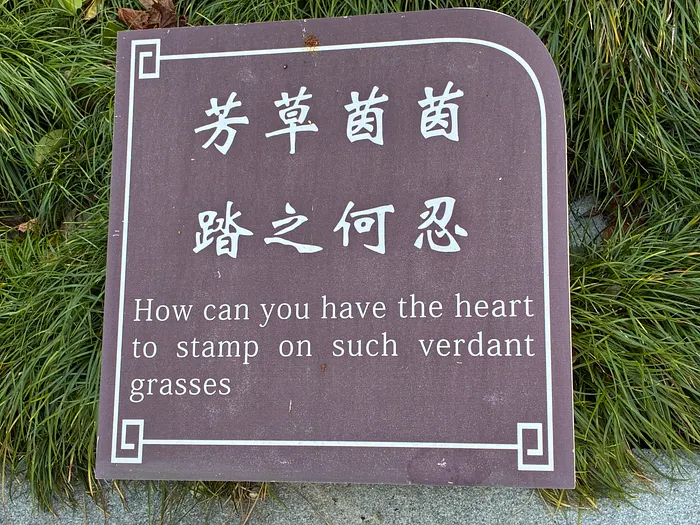
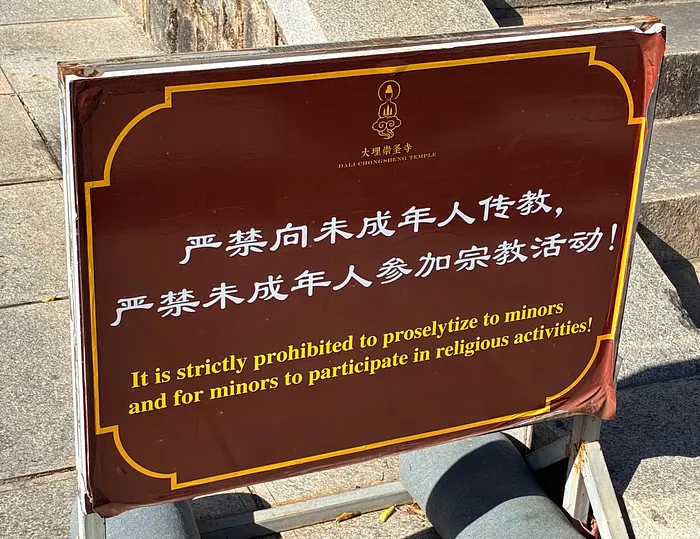
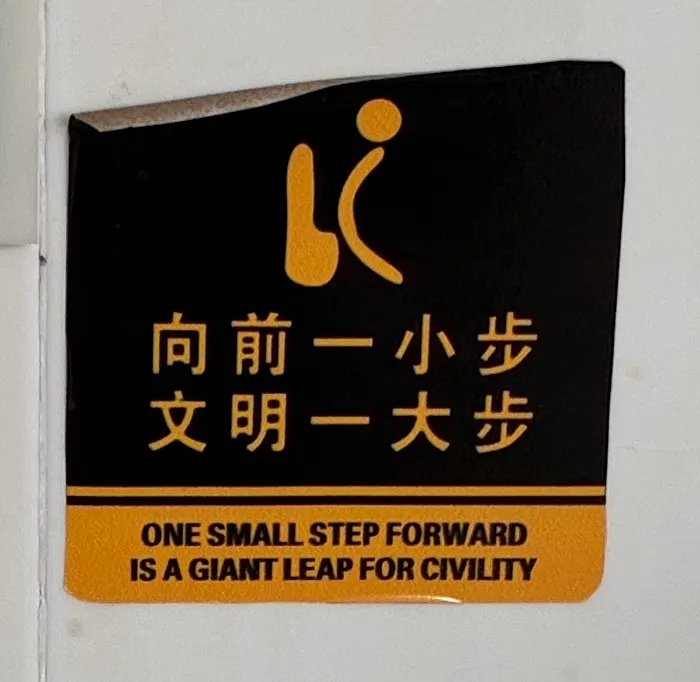
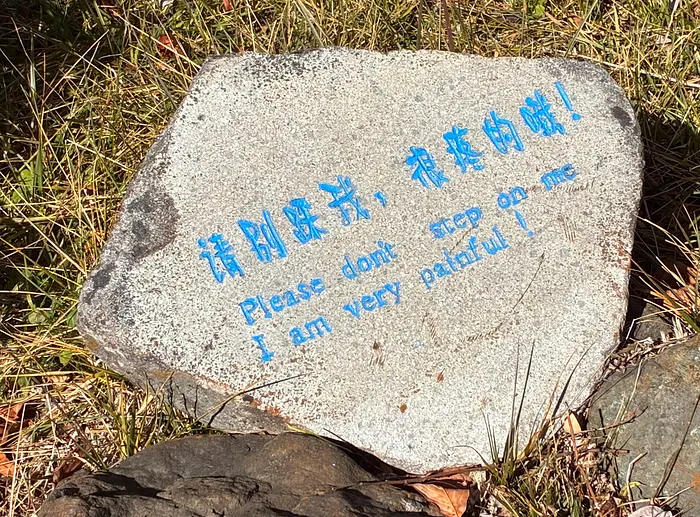
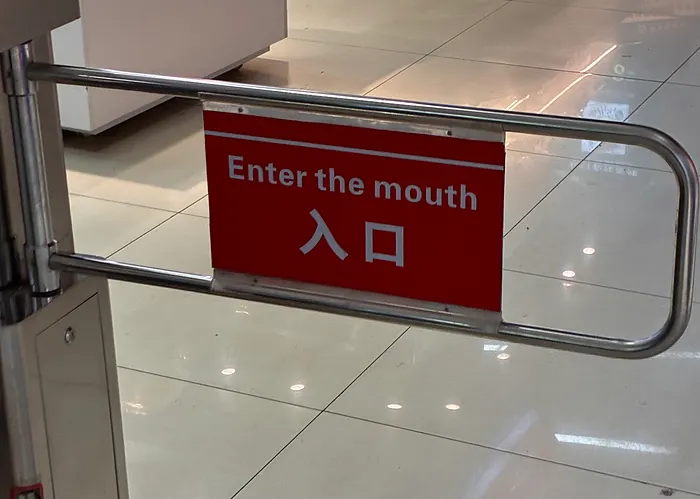
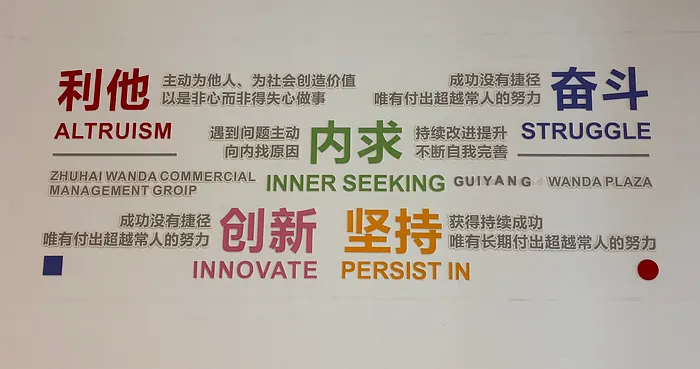
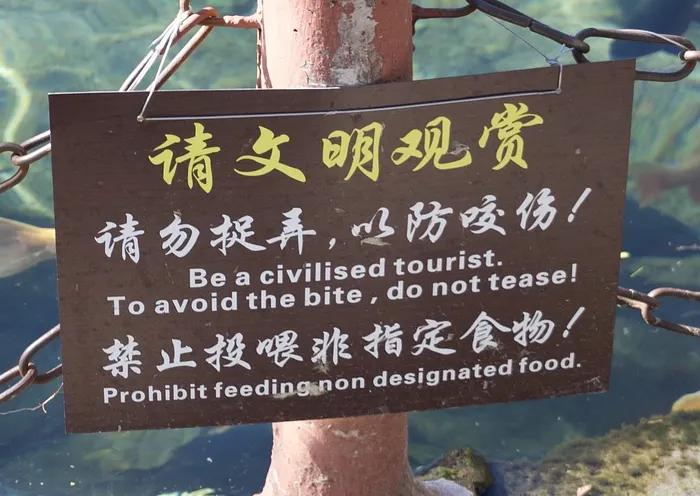
Something else useful is the historical status of English. I’m not sure, but I think this is the reason you see so much English signage, even in regional cities in northern Yunnan which are hardly cosmopolitan hubs. Most stores and restaurants, for instance, will have their details in English on their signs.
Economy

Conditions seem grim. Everybody I talked to put on a brave face, but readily admitted they were struggling to get by. Hours are long, wages are low, their growth is sclerotic in a lot of sectors, and much more of the economy feels like a zero sum game despite the dynamism. Multiple people told me, unprompted, that I shouldn’t consider living in China. It’s hard to get ahead, partly because everyone is playing the same game.
You really notice the way that everyone is competing in the same verticals. This goes all the way down to the peddlers that harass you at tourist sites: Each individual peddler at each site will be offering you the exact same service with the exact same products, often showing you exactly the same photoshopped image as advertising. If somebody comes up with a business model that’s even mildly successful, they’ll have half a dozen immediate competitors.
This grimness is reflected in your interactions with anything as a consumer. People are really glad to have your business in a way that’s alien in the West. JD.com will interrupt your shopping to offer you 1 yuan coupons; the fact people are interested in these is a bleak signal for consumer demand. Physical stores are happy to offer you attentive service, I think because of intense competition from e-commerce. They have to differentiate themselves somehow. If you have no sense of style, you could do a lot worse than walking into a decent clothing store in a Chinese mall and letting the staff pick things out for you.
However, the SOEs sometimes do things right. I need to talk about the hotels, because they were one of the biggest positive surprises for me. If your experience is anything like mine, you stay in your first room - a mid-tier chain like Hanting - and think, huh, this is pretty nice actually. Then you stay in a few more rooms in various different chains at various different prince points. And you start noticing.
You notice that no matter where you are, no matter what chain you stay in, the light switches are almost the exact same part. And the LED mirrors. And the smart toilets. And the motorised curtains. And the delivery robots that transport takeout from the lobby up to your door. And the Chinese Alexas that can control everything in the room (and will notify you about deliveries from said robots).
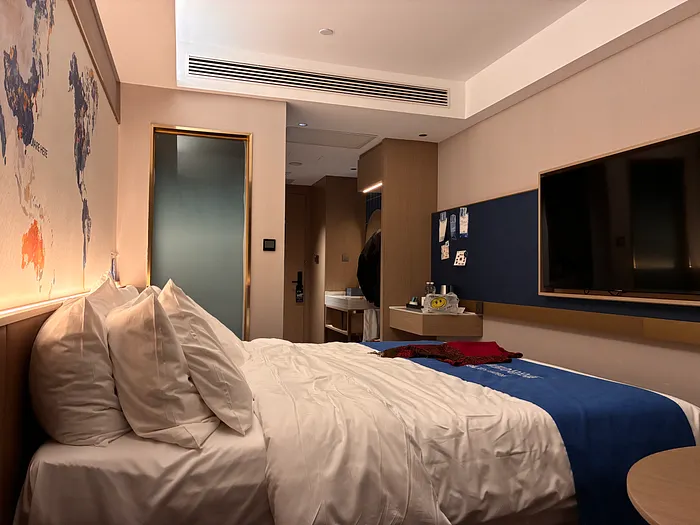
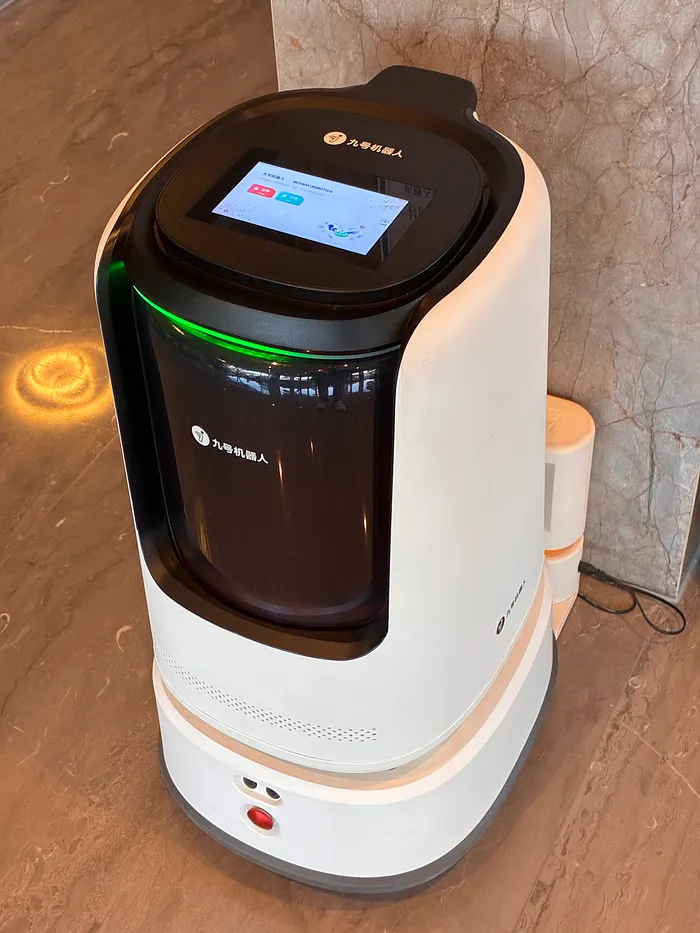
My understanding of why this happens is because ownership of Chinese hotel chains is centralised into three massive conglomerates, and all of those conglomerates are buying from the same catalogs of standardised parts. The staggering scale of this market drives down the price of nice furnishings, so that even budget hotels are well equipped. What this means is that rather than needing to choose between a uniformly bad room and a uniformly good one, price differentials are just due to location and floor area. There’s no need to overpay for a central location just to ensure you get somewhere nice to sleep.
There are other factors. The culture and low labor costs combine to produce some amazing hotel buffets - even at a Hanting, you can start your day with a steaming bowl of noodles handed to you straight from the kitchen by a chef. And the conglomerates haven’t just optimised their supply chains. The rooms felt like exactly what I wanted: nicely furnished, with a variety of charging ports, good wifi, a single blanket that isn’t tucked in, firm mattresses, and good sound insulation. It feels like you aren’t paying for anything you don’t need.
I mentioned earlier that design can be a weakness of China. One exception is the Hanting chain. Their sheer scale means they can fully coordinate their interior design with results that are refreshingly attractive, if somewhat minimalist. My room in Hangzhou had, for example, a Hanting-branded hair dryer, whose casing was colour-coordinated with the wallpaper.
Technology
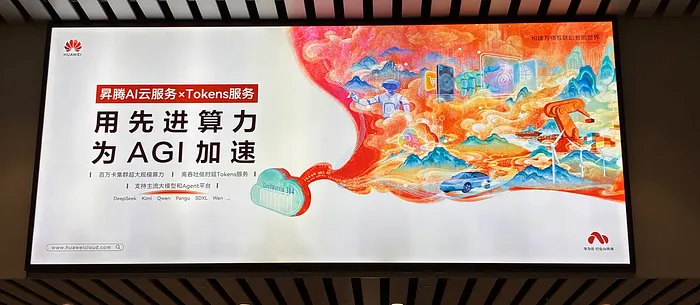
One bit of design I particularly disliked was the super-apps. Yes, WeChat and Alipay are much more convenient financial infrastructure than we get in the West, but everything else... I don’t know. I don’t like the maximalist 2008-Amazon design with a million icons crammed into the screen. I don’t like feeling my brand-new iPhone get physically hot just from having WeChat open. I don’t like losing 10% of my battery ordering food. I don’t like having a livestream with a costumed influencer aggressively trying to sell me menu items auto-play when I try to order McDonalds.
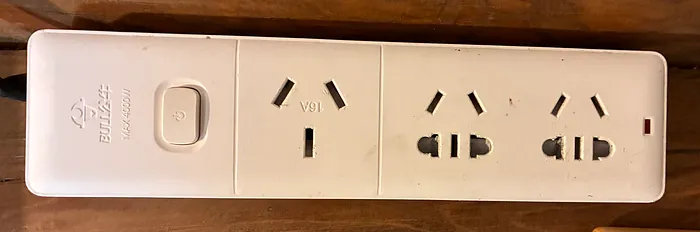
Most of all, something about the super-app concept is philosophically offensive to me. Think about what you’re actually doing when you order a power bank on JD. You open your phone, which has run a bootloader on its processor that has loaded the Linux kernel. On top of the kernel you have, say, Android. On top of Android maybe you have some proprietary sediment from Samsung or a Chinese OEM. On top of that, you install WeChat as an application. Then you launch WeChat and launch JD’s application within WeChat, using WeChat APIs with a thin layer of JD web UI slathered over the top (if my understanding is correct). Now you can finally search a database and place an order for some goods. Rationally I understand the technical tradeoffs at each level, but… what are we doing here, man?
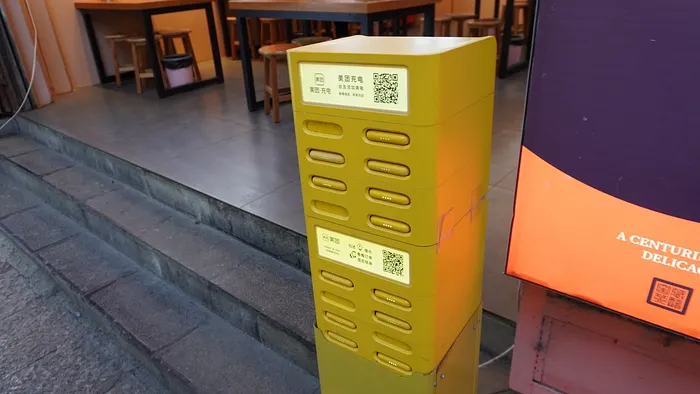
Super apps are so resource hungry that I genuinely don’t know how people with low-end phones survive. My best guess is the liberal application of power banks. Having your phone go flat in Guangzhou airport is probably the closest you can get today to what Case experiences at the start of Neuromancer.
You don’t necessarily notice a lot more security cameras everywhere compared to Western cities, especially not somewhere like London. What struck me more was that there are cameras in all sorts of random rural places. I saw one solar-powered camera that was ziptied to a tree, facing a lake, apparently to discourage illegal fishing. Also, most of these cameras are Hikvision - they have crazy domestic market dominance.

On the other hand, boarding domestic flights using a facial recognition system I never signed up for (but that could nevertheless recognise me) was a little unnerving.
Overall, the most striking thing about China is its scale. I think I came away more sympathetic to the case of China critics than boosters; in particular, the perspective of Industrial Party types clearly misses a lot. The ‘fake economy’ and demand side policy have a big impact on people’s day to day living standards. Even if you don’t care about this, it’s clearly a key source of legitimacy. But it’s also a source of distortion and inefficiency, such that China simultaneously feels like a richer and poorer country than it actually is.
I only hope that each year the seagulls will return from Siberia to find a land freer and more prosperous than they left it.