July 2025 Links
Polar exploration, lasers, and drone agriculture
Ten things I found interesting last month:
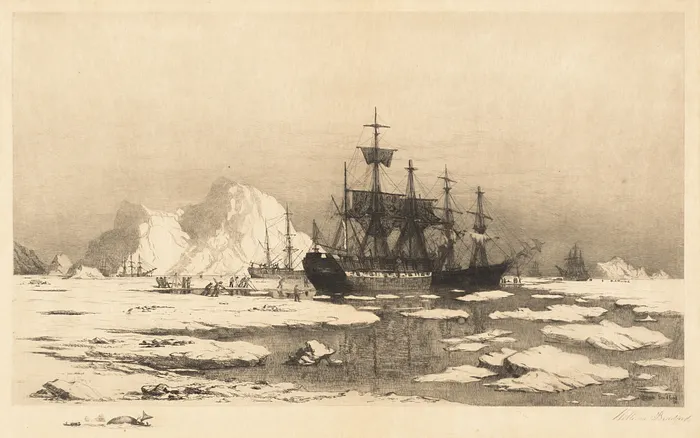
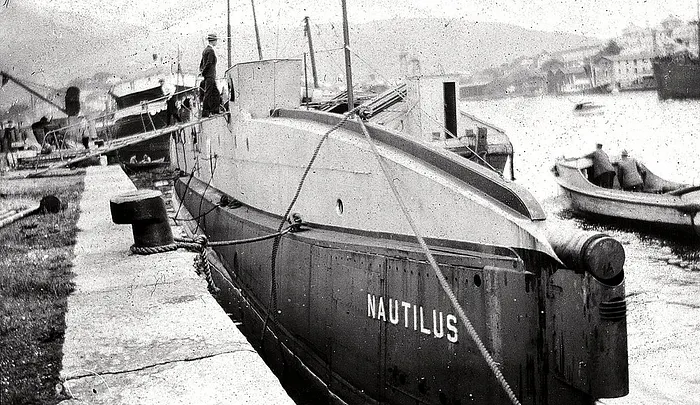
The Nautilus expedition is one of many episodes from the era of polar exploration that sounds like a novel transplanted into real life. The plan: renovate a First World War military submarine into an exploration vessel and drive underneath the ice to the North Pole. The whole thing was financed by media magnate William Hearst (media magnates of today, take note!). Several gizmos including a “trolley pole” to detect clearances to the ice above and a drill for opening air holes were added; unfortunately, they neglected to properly test these before setting out. The whole thing was a litany of mechanical disasters, from losing both their engines due to storm damage to arriving at the ice pack on their second attempt with the control surfaces that enabled diving missing. With Hearst refusing to pay unless they actually got to the pole, the expedition’s commander decided to “dive” by ramming the ice. Surprisingly this kind of worked and they managed to do some useful science before making it back home with the entire 20-person crew intact. Hearst, of course, refused to pay up.
After two years ToughSF is back with a killer two-part post on lasers. Powerful lasers are following the same cost curves semiconductors and solar panels have; if the trends hold, it’s likely there will be a “laser moment” around 2040, similar to the sudden explosion in solar capacity we’re in the middle of today. Making this more likely is the MIC backing laser development, compared to solar having to rely on weirdos in Germany and China making early uneconomic bets. And these lasers would be, shall we say, disruptive:
Travelling at 900 km/h, there is an interception window of 80 seconds. The 1 MW laser would start by cutting through 61 cm of aluminium alloy per second, and its penetration rate increases exponentially from there…. which means it only needs to dwell 3.3 - 16.4 milliseconds on each missile to get through their 2 - 10 mm of aluminium. In fact, if we use the 1-10 kJ/cm^2 “hardness” rating of missiles, we get similarly short dwell times of 3.1 - 31 milliseconds.
The tactical picture that emerges seems to be a sort of arms race between fleets of suicide drones and medium-sized laser turrets that can delete almost anything they can see. Another surprise was the issue of diffusion and atmospheric interference, which turns out to be less of a showstopper than I had assumed.
This WIRED story on the low-paid foreign workers who run chats for OnlyFans models inspired The Girl from Nowhere and is a great window into one of the many niche industries the internet has spawned.
There’s a chance that the US could be left behind in drone agriculture as it moves to lock DJI out of its domestic market with no serious home-grown competition to replace it (yet). I’m uncertain as to the long-term importance of drone ag to future agricultural productivity growth, but it seems underrated, considering how much of agriculture consists of “applying stuff to fields” whether that is fertilizer, seeds, or pesticides. Drones are basically the ideal platform for this, and US farms are already highly automated, capital-intensive businesses. It’s not as existential as falling behind in military drones, but these mundane applications could be critical in the long term.
How the quest to type Chinese on a QWERTY keyboard created autocomplete. There seems to be a lot of room for improvement in our “middleware”.
Multiple nations enact mysterious export controls on quantum computers. OK, I know this must have a boring explanation (it seems to stem from simulating quantum computers on regular silicon), but the way they phrase it makes it sound so juicy:
“The limits chosen are based on scientific analyses of the performance of quantum computers,” the spokesperson told New Scientist. But when asked for clarification on who performed the analysis or whether it would be publicly released, the spokesperson declined to comment further.
No doubt a dashing young CIA agent is having a whirlwind romance while being hunted through the streets of Prague by Russian and Iranian agents desperate to get their hands on a secret quantum algorithm — the REAL reason behind these policies.
Moshidora is possibly the most Japanese movie ever made: A girl leads her high school baseball team to success using the management techniques of Peter Drucker.
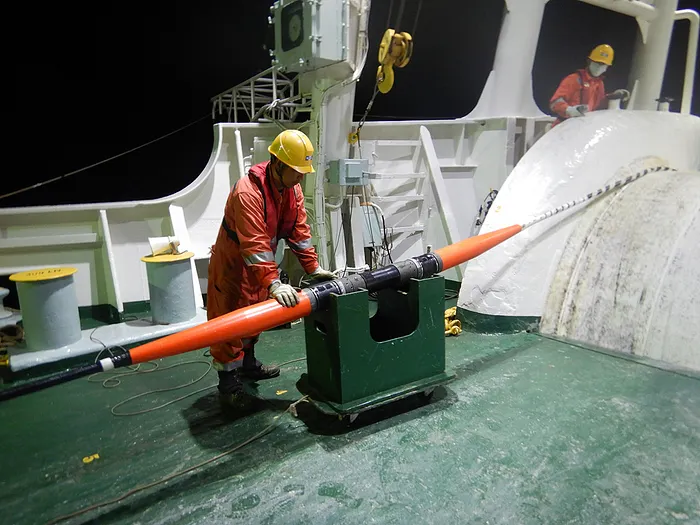
This incredibly good Verge article on the industry that lays and maintains seafloor fiber optic cables: one of the world’s most important jobs, which usually receives zero attention.
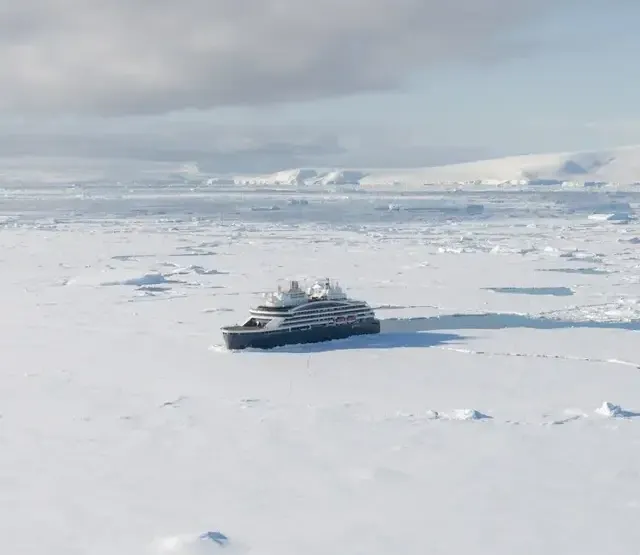
If you have five to six figures burning a hole in your pocket, you can now take a cruise on this French LNG-powered hybrid icebreaker cruise ship and see the Arctic circle in luxury.
Auditory presence describes the unique characteristics of an environment that are encoded into a recording done by a microphone. It’s a crucial part of sound mixing in film and seems to be used as a sort of foundation layer. I’m reminded of the way you can analyze the grid frequency to get a temporal fingerprint of audio if you have access to the frequency data put out by the grid operator (which is usually public). That plus presence gives you a temporal and spatial fingerprint. There’s an enormous amount of information about the world encoded even in lossy audio!