Driving is art
Dancing in an alien body
Have you ever wondered why we don’t have an art based on touch?
The other four senses are covered. Painting, music, cooking, and perfume, for instance. But it doesn’t seem like there is an artistic discipline that is primarily based around touch.
I think there is a good candidate which tends to be overlooked: cars1.
The thing with cars is that you probably drive regularly but might be baffled by the idea that driving could be an art form. Here’s an analogy: imagine a world where most people drink Soylent for every meal. In this world, restaurants exist that will sell you wood-fired pizza or siu mai or whatever else for a small premium over the Soylent, but almost no one is interested. And half of those who are want to be served disgusting food-shaped items to signal status. This is how I feel about the car market.
But what can you get out of this post?
First, it might improve your life. The intent is to get you up to speed on sports cars in a short time and communicate their appeal. Then you can buy and enjoy one without having to spend hours inducting yourself into a hobby.
This is particularly important with cars because the hobby is so expensive. Getting into cars exposes you to a lot of counterproductive memes. For instance, it’s easy to become convinced that you need to own (or even worse, build) something ludicrously fast, even if you don’t really want to. So you want to engage, but not too much; this post is designed to provide that.
Other approaches include ‘cracking cultural codes’ and as a bridge between the two cultures. Imagine an engineer who disdains the humanities and has never read a good novel. You might see this as embarrassing or tragic. Consider the obverse: someone who can quote Milton offhand yet doesn’t appreciate a good car.
The experience of driving a good car
Driving is a dance in an alien body. It’s the low-tech version of transhumanist resleeving. It works because good cars provide feedback: your hands hold the wheel, which is connected to the steering rack, to the axle, to the wheels, to the tyres, and then to the road. A fully mechanical system conveys a huge amount of low-level detail your brain can pick up through touch or proprioception, and it provides this in a tight feedback loop.
In contrast, a bad car has you disconnected from what it is actually doing. You make suggestions using the control inputs, it infers your intent, and then it acts without telling you much.
So why do bad cars exist? Tradeoffs. The average buyer wants something pliable, comfortable, and cheap. There is nothing wrong with this, but most people are not aware of what they are missing out on.
Take steering as an example. Hydraulic power steering was dominant between around 1980 and 2000. By 2010, these hydraulic systems had shifted to electric ones. Some feedback was present in the hydraulic systems, which were still mechanical and tended to provide less assistance than their electric counterparts; but today almost every car has strong electric power steering. The wheel is light and easy to throw around; the electric assistance overwhelms any mechanical feedback. The sensation of steering is dead. You are making a suggestion.
In hindsight, hydraulic systems were a good compromise. But they were doomed because they were more complicated and expensive than electric racks, and because consumers want a steering wheel that’s easy and forgiving to use.
This pattern happened to most parts of cars at the same time. So the two decades from 1990 to 2010 were the pinnacle of everyman sports cars. Driving is unusual in this respect, because some of the greatest drivers’ cars ever built were released in the past few decades; many are still available on the used market. Compare this to other artistic disciplines where we live in the shadow of old masters who are now centuries dead.
But the window to experience this is closing. Some good, attainable cars are still produced, but the best of the 1990s have already aged out of the used market and are now considered classics. This is now the best time to buy a 2000s car; they are as cheap as they’ll ever be, but this will change in the next five to ten years as they go the way of the 1990s.
Some tradeoffs to consider
Like anything else, buying a car is all about making tradeoffs. You want to consciously trade off things that don’t matter to you so that you can get more of what does.
Age is a good place to start. Buying an older car is cheaper, and as I’ve just discussed it gives you access to vehicles with features that are hard to find on newer cars. Trading off weight is another good idea. Light weight is one of the single most important variables for enjoyable street driving. A light car has less inertia and is hence more nimble; it also feels more engaging at lower speeds. Something small and light is likely to be cheaper to buy and maintain, with inexpensive parts and a simple design. You can also trade off comfort and status. Something with fewer creature-comfort features and without a prestige badge is going to be more attainable on the market. There are various things that confer status within car culture which increase used-market prices and that you can safely ignore. If your lifestyle supports it, you can also buy something impractical like a two-seater convertible.
But what are we trading off for?
Firstly, the shape. A good car has a rigid skeleton which transmits feedback to you and doesn’t flex under load (like during a corner). It also, hopefully, looks beautiful. Cars are one of the only areas in which the art of sculpture has survived, and they ought to be looked at as such.
Secondly, the inputs. Steering is the obvious place to start, but it’s hard to give broad guidelines here. Basically, you want something interactive: something that weighs up as it turns into a corner, that communicates the texture of the road, the level of grip, the behaviour of the tires. This YouTube channel is a good resource for detailed reviews. This is one area where sports cars in general distinguish themselves, but it’s not as uniform as you might think.
The transmission is another big one. Car enthusiasts will tell you that anything short of a manual gearbox is a compromise, but there are caveats here. It’s not true that a manual is some sort of transcendent experience that a good automatic can’t even approach. And it’s true that learning to drive a stick shift is a non-trivial endeavour. If you’re willing to put the time in, though, it provides a huge amount of interaction with the car.
Distinctions between automatic transmissions matter too. All manuals are basically the same, but there are meaningfully different types of automatics. In general, CVTs are bad, torque converters are OK, and DCTs are better. A good DCT like the best offerings from Porsche or Volkswagen shifts in a fraction of a second, slamming the car into the next gear in a way it’s hard to replicate with a manual.
Then there’s the suspension. Faster cars have stiffer and lower suspension. They remain flat and stable around corners and don’t excessively load their inner tyres, and hence can go faster without losing traction. From this perspective the ideal suspension is a solid metal rod. But stiffness also makes the ride harsher - more grating, but also providing more feedback around the texture of the road. So the actual ideal is a carefully tuned balance: something that’s soft over sharp bumps, but which stiffens up in a corner and which allows the car to turn in sharply.
Suspension is one of many aspects that affect the grip available to the car, which is usually the limiting factor on speed. Tyres are the most important part of this, and a good set of tyres is the biggest single performance upgrade available to most cars. Good tyres also feel completely different to bad ones, and provide better feedback; they are, after all, the part actually touching the road.
The car’s layout is also worth considering. This is a combination of the location of the engine and which wheels are powered. Having the engine closer to the centre of the car is better because this reduces rotational inertia. It also helps with balance: you want a 50:50 weight distribution between the front and rear axle, which makes the car more composed. You also want something with rear-wheel drive, because the car settles onto its back wheels under acceleration; RWD cars feel very different when driving hard, and don’t struggle with grip the way FWD ones do. AWD is ideal for maximum grip and maximum performance but lacks the lunging character of an RWD car powering out of a corner.
Another grip-related feature to look out for is a limited slip differential. When turning a corner, the car’s inner wheels must turn at a different speed to its outer wheels. Normal cars solve this by coupling the engine to the driven axle with an open differential, a simple mechanism that transmits equal torque to each wheel at varying speeds. The trouble is that if the unweighted outer wheel loses grip, then the open diff is unable to transmit power to the inner wheel. An LSD solves this. It shifts torque delivery to the inner wheel as the outer wheel starts slipping. The LSD is invisible under normal driving but it completely changes the character of a car at its limits, allowing it to be driven much harder while maintaining traction.
Finally we come to power. This is last on the list deliberately; I’m not going to pretend it doesn’t matter, but it is hugely overrated. Trading off power is an excellent choice. Something that makes more power will be much more expensive, more complex, less reliable, and less efficient. And it doesn’t matter that much because raw speed gets old (and illegal) quickly. The real pleasure of driving is in attacking corners; maintaining the speed at which you are flirting with the limit of grip requires only modest power.
So tuning and chasing power is, in my opinion, a great way to waste a lot of money. But the way a car makes power is a large part of its character, and that is worth discussing. The main distinction is how the engine gets its air. Engines are either naturally aspirated, i.e. they just suck air through an intake pipe using the downstroke of the piston, or use forced induction. This means a turbocharger or supercharger, an air pump that forces more air into the combustion chamber, which allows the car to add more fuel and make more power.
NA engines are highly linear in how they deliver power and start off slow, because they make less torque, but pick up with a flat scream as they near their limiter. Supercharged engines are similarly linear but pull harder with their additional torque and have a characteristic whine produced by the spinning turbomachinery. Turbochargers are very different: there’s a delay until their torque kicks in due to the turbo being driven by exhaust gas. And their sound is dominated by the hissing of air as it’s sucked in during induction or blown off.
You may notice that some of this is not directly about feedback. It’s not immediately obvious that speed should have anything to do with how closely you are coupled with the car. But faster driving is more engaging; inputs need to be more precise, you are receiving more information from the car, and you’re operating closer to the limits of grip.
So these are the basic ingredients. But in practice they’re combined into tradeoff packages: different classes of car which you’ll need to choose between.
Street cars are fun to drive under normal traffic laws. They might not be practical, but they offer a baseline of comfort and can handle potholes. They’re probably slow, small, and lightweight. They trade off serious performance and luxury. Think a Mazda Miata.
Track cars are designed to maximise performance in a closed racetrack environment. They’re harsh, unforgiving, and rely on smooth track surfaces. Often they’ll be a bare metal shell inside to save weight. Milder versions are sold as street-legal cars that trade off comfort, practicality, and cost to shave milliseconds off their lap times. Those milder versions are sometimes homologation specials - street-legal production versions of race cars built as a condition of entry into a series. Think a Lotus Elise.
Rally cars are built for speed in dirt, gravel, and mud. Heavier than track cars and with more ground clearance. Rugged: these can, and do, take a beating. The limiting factor is still traction but in a different regime. So they add AWD systems and trade off everything that might slow them down: refinement, comfort, cost and simplicity. Like track cars, plusher versions are available as homologation specials, and some of these lineages have grown into plush lines of AWD sports sedans. Think a Subaru WRX.
Autobahn cars are made for sustained speed in a straight line. Huge engines, plush interiors, the latest features. The granular, grating feedback of track cars is traded off for comfort. Cost and weight balloon at the same time as engine size. Mechanical complexity proliferates - the owners can afford to service it. Think a Mercedes E63.
The experience of working on cars
Normal maintenance - like changing the oil, air filter, spark plugs or brake pads - is fine; it also has the biggest return on investment, since it’s much more common. You should definitely learn to do this sort of thing.
But it is a valid choice to respect the specialization of labor and have professionals do the important jobs on your engine. It is very much worth it to pay for this: it will save you a huge amount of time and probably also money.
Doing significant work on a car sucks. It’s type 3 fun without the excitement of mortal danger. It all looks simple when a professional mechanic does it, but that’s because mechanics have learned to cut between the joints. They know exactly what to do; as soon as you deviate from their procedure as a novice you will find yourself in a wilderness of frustration and confusion, like a traveller seeing their will o’ the wisp blink out and finding themselves knee-deep in bog. You need to do this at least once to learn - you will think your shortcut or change is the exception to the rule, because you understand what you are doing.
You will break things, and the things you break will sometimes be expensive or require you to take half the engine apart to replace. You will drop tools into the engine bay and fish around with a magnet on a stick trying to pick them up. You will become covered in grime. You will learn your hand can fit into places much smaller than you thought.
My one piece of advice is to NEVER try to force anything (except the things that you do need to force, which you just need to apply exactly the right amount of force to). Good luck!
There are benefits, though. It’s an interesting experience because the car is designed to be maintained but other considerations take priority. It gives you a good sense of how cars work and why they are designed that way; it exposes the ‘surprising amount of detail’ in the functioning of the car, more so than simply looking at each component. You learn things like how it feels as a single-use washer is crushed against the oil pan, sealing the drain plug. And it’s satisfyingly honest. If you spend all day in the world of signs and symbols, changing a gasket can be a tether to physical reality.

Car culture
What is it like to be a car enthusiast? Hopefully you understand some of that perspective by now. But there’s more to it - the basic story about feedback and engagement doesn’t explain the strangely personal relationships people form with vehicles.
There are several dimensions to caring about cars beyond the raw experience of driving. One is something I’ve already mentioned: Cars as sculpture, as beautiful objects, with paint like the surface of a gemstone. Car interiors, too, can be beautiful, in the same way that you might admire a Frank Lloyd Wright interior.
What are the Vermeers of car design? Mainstream lists tend to be dominated by older examples like the Jaguar E-type, Ferrari 250 GTO, or the Mercedes W198 SL. My tastes skew more modern: the FD RX-7, Jaguar XJ220, C5 Corvette, Porsche 911 (993), and BMW E92 M3, to name a few.
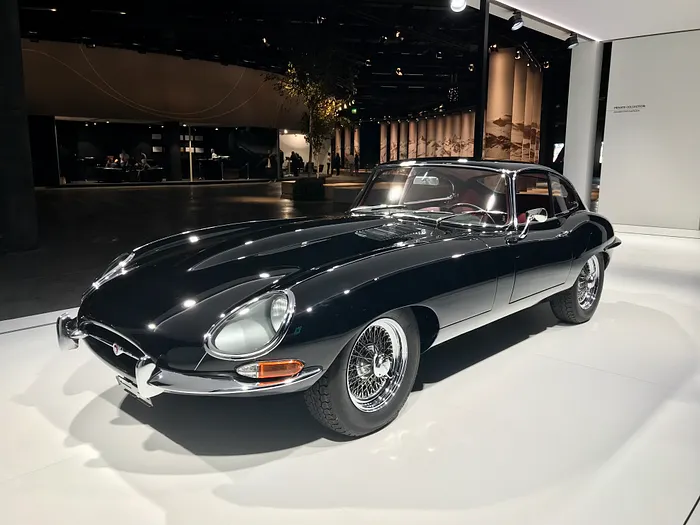

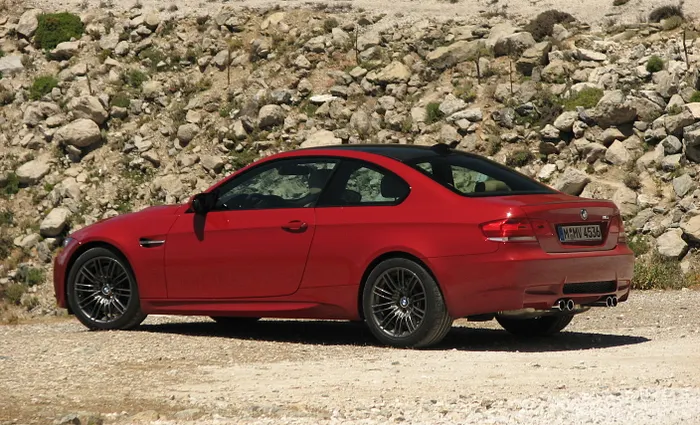
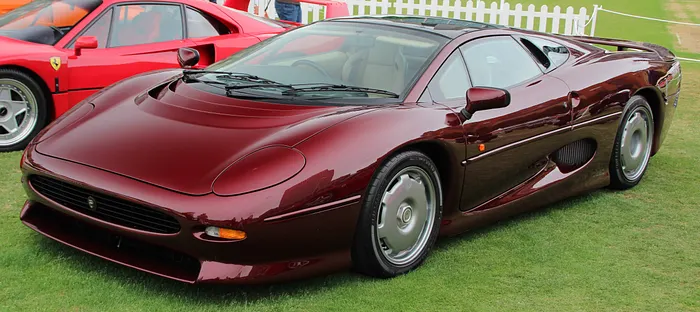
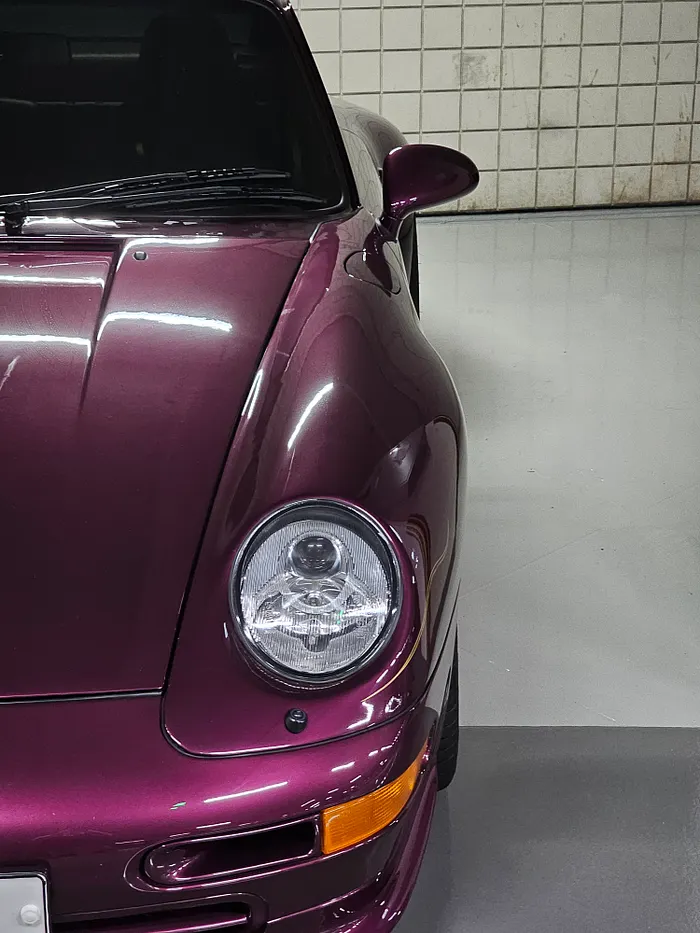
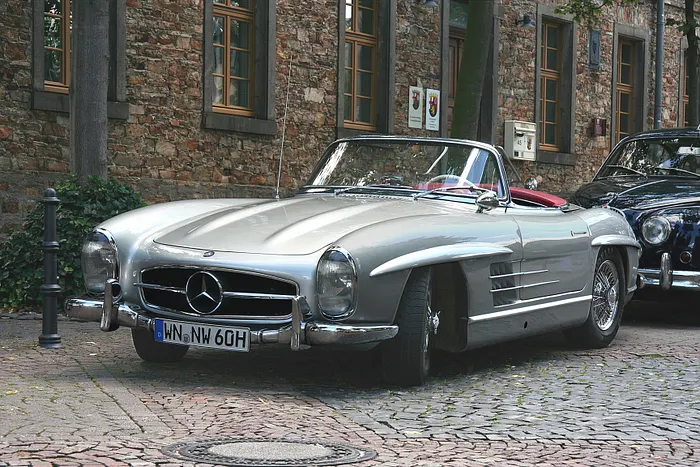
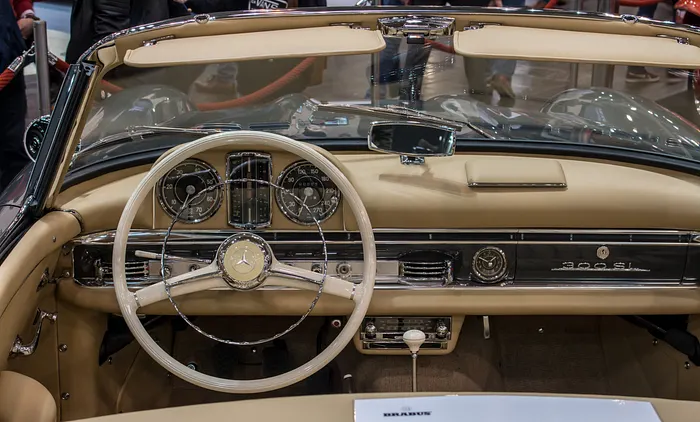
Like sculptures, cars must be seen in person to be fully appreciated. How would I describe this?
It transmutes the glare of parking garage lights into something liquid and alive. The light pools in the curves of its body. From a distance, it seems like a single drop of water, but up close the depth of the paint becomes apparent: a still pool that drinks the light, dazzling flecks suspended within it like a tiny universe. At night and in motion, it is a fish in dappled water. It darts and flows. Its shape is always changing.

Status is another big one. Certain cars like the Nissan Skyline R34 GTR and BMW M4 Competition (G82) have cultural profiles well beyond their actual merits as vehicles. They’re symbols of eras, stories or lifestyles. This phenomenon extends beyond the world of enthusiast cars to things like Range Rovers or the Mercedes G class, but it’s dialled up to eleven in the enthusiast sphere where opinions are stronger and details matter more. Think disagreements about which style of wheel suits a certain car rather than broad generalisations.
Probably the largest component of the enthusiast mindset is the emotional relationship that they maintain with the cars they own. Cars are thought of as closer to a pet than a possession. They colour the seasons of life and any attempt to restrict them is seen as a tragedy akin to caging a wild horse. There’s a cynical undercurrent to car culture sometimes, something carried through from its working-class origins - an individualist disdain for The System.
Another important aspect of the emotional relationship is embodiment. When you are in your car, your perspective changes. You are a different creature in a new body, and the modern city is designed for you. Everything shrinks. You feel at home in a way you don’t when you are a human. There is a sort of low-grade dysphoria one experiences as a person walking along a highway or through a parking garage which is alleviated by driving. Notice how cars are often professionally photographed in spaces that are liminal to people: industrial estates, warehouses, carparks.
This package is often looked down upon. There’s some aspects I agree with here - I also find status games uninteresting - but I also find some parts worth defending. It’s good to have a relationship to your car, actually: if you have to own one anyway, it makes your life richer. It’s so easy to reject anything that could scan as too earnest or too cringeworthy. But it actually is good to care. It is good to see the beauty in more aspects of life, to be a good steward of things you control. It is good to take a years-old photograph and see a scene rich with the texture of memory rather than yourself, an unmoored individual, superimposed over another flat backdrop.
Tribes
Like any subculture, car culture has distinct subgroups that form their own social ecosystems, but which collide during the largest events. You are probably familiar with some amount of this already just from owner stereotypes (BMW owners, am I right??) that percolate into mass culture.
Muscle cars and hot rods belong in a single vertical; this skews toward older men, uncomplicated patriots of V8-producing nations like the US and Australia. Sometimes the muscle community looks backward to a golden age in the 1960s that is forgotten elsewhere, but it also encompasses more modern phenomena: think of the stereotype of Hellcat owners in rough areas or the Marine who makes a down payment on a Camaro with his first pay check. Muscle guys tend to focus more on drag-strip times than other subcultures; the extreme muscle enthusiast is more likely to sacrifice drivability for low-pressure drag slick tires in the rear than a stripped-down track interior. Muscle tuning is its own niche industry that revolves around superchargers with the displacement of an economy car’s entire engine.
Another broad area consists of drifters and JDM people. JDM, Japanese Domestic Market, is really an American term. US regulations made used imports from Japan difficult; combined with the special domestic editions of many Japanese cars, this gave JDM vehicles a certain aura in the US environment. However, today it encompasses Japanese-car enthusiasts worldwide, even in markets like NZ (which is basically an extension of the Japanese domestic one). Drifting is closely associated due to its Japanese roots. The JDM scene is more focused on street racing and aftermarket modifications; it also has the highest proportion of women of any car subculture. The essence of the JDM scene has shifted over time. During its 90s/2000s heyday, JDM cars were incredibly cheap and capable street machines, but today the scene is more about attempting to relive that era, with used JDM icons now more expensive than many new cars.
European enthusiasts are worth mentioning in opposition to the JDM scene. Probably the largest component of this are BMW enthusiasts, though Mercedes and Audi have smaller dedicated followings. Brands like Volkswagen are among the most popular for street tuning due to their extremely well-understood turbocharged engines. Traditionally, Euro cars have been more complex and expensive than their Japanese competitors, but the state of the JDM used market is starting to shift this. At the top end this shades into well-off Porsche and supercar owners who are looking for a serious but comfortable part-time track experience.
Track drivers are another niche. People who really do just care about going fast; no status farming, no nostalgia, no wasting time on the street, just sending a stripped-down shell around the same twelve corners every weekend. They tend to be practical and slightly obsessive souls, willing to spend thousands on lightweight components and able to tear down their engines in a trackside parking spot. It’s easy to respect their dedication to the art of driving, but they do tend to discount some positive aspects of car ownership in my opinion.
I touched on this earlier, but tuner and stance culture is its own well-established niche that overlaps with some of these areas. Tuners often spend more time working on their cars than actually driving them, obsessively chasing higher horsepower numbers and willing to replace practically their entire engine to do so, whereas stance enthusiasts and their close cousins are focused on cars as a sort of physical modern art, even if the result is barely able to drive.
Cultural landmarks
Since driving is a dance, it makes sense that some of the most influential car media is music. The dance of driving is flirtation with the limits of control, so it makes sense that car music is comprised of frenetic metronomes that urge you closer to the edge.
Eurobeat is probably the best known of these. As the name suggests, it’s produced in Europe, but is most popular in Japan. Italian Eurobeat acquired a cultural niche in 1990s Japan before being eternally wedded to car culture by its use in the anime Initial D.
More recently, various flavours of house have become popular in this space. I highly recommend this video, which captures the essence of the imagined golden age of street racing during the 1990s. ‘Phonk’ is the latest contemporary phenomenon - a subgenre of hiphop with origins in the 90s which was re-popularised by short form videos of drifting.
TV and films are the runner up in terms of influence. The aforementioned Initial D looms large over drift and JDM culture; it’s what made touge racing a household name for the current generation of enthusiasts. Fast and Furious is the runner up here in terms of influence, which is surprising if you’re thinking of the latest travesties, but it’s the first few films of the franchise which count. Practically every detail of the first three movies have influenced car culture in some way. Both Initial D and F&F are so influential that they’ve driven up the used prices of specific cars featured in the series.
More recently we have seen some films really capture the spirit of driving. Rush (2013) and Ford v Ferrari (2019) are both excellent, and even the recent F1 movie manages to capture some of the magic in a cinematic spectacle despite its corporatism.
Of course there is far more to cars and car culture than this brief introduction. If you are interested, the best thing is to get some seat time yourself; for that, you might find the second part of this post helpful, which contains some practical advice and model recommendations.
Sex is another candidate but that’s been thoroughly covered on here.
↩