February 2026 Links
Archipelagoes, web fiction, and schizophrenic mice

millmint.net is an incredible one-man multimedia project. It’s equal parts art book, secondary world wikipedia, and slice of life drama. The setting is wonderfully unique - an alternate history future that has the same relationship to the Cold War as steampunk does to the Victorian era. It’s centered on the Commonwealth of Vekllei, a coalition of most of the world’s offshore islands which is organised in a socialist, post-scarcity planned economy. Think: Thunderbirds, “too cheap to meter”, spaceplanes, electrified trams, UN peacekeepers, Frank Lloyd Wright, Golden Age SF, tea in bathhouses. Worth visiting for the web design alone. (Despite the cover image, it’s focused on the Atlantic).
Some good science fiction from an AI researcher. If you liked the Diary of a U-Beast chapter from Perhaps the Stars, this is similar. I don’t believe current LLMs are sentient, but I love fiction about what it’s like to be an LLM. The same goes for fiction that engages seriously with programming like this. Since this one is a little technical, see the footnote to this sentence for my understanding of what’s going on1.
This post, providing an overview of what we understand about how biological neurons work, is great. But the part I found most interesting wasn’t about neurons at all:
Furthermore, neurons are only around half of the cells in the brain. The other half are glial cells, which have their own incredible diversity of structure and function, and regulate neural activity and cognition on the timescale of seconds to hours. By the way, implanting human astrocytes (non-neuron glial cells) into mice makes them smarter.
The human glial cells can integrate into mouse brains and improve their efficiency. Transmission of signals is faster, and the mice learn better by making stronger connections between neurons. Removing this bottleneck seems like it allows the mice to skip some of the evolution we went through to improve the architecture of our brains. The next step? Creating glial precursors from the skin cells of schizophrenic patients and implanting these into mice to help design better antipsychotics.
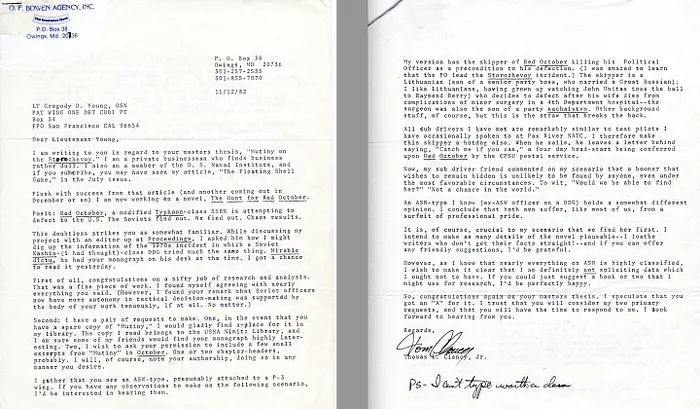
Tom Clancy was a 37-year-old insurance salesman when he published his first novel, The Hunt for Red October. The book was based on a real scenario in which a Soviet vessel attempted (unsuccessfully) to defect. But how would Clancy get any information on that in the 1980s? By finding an obscure Master’s thesis from a Navy lieutenant who teased out the details. The letter he sent to follow up with the author is an interesting little piece of history:
China has its own tradition of Clancy-style web novels. The most prominent, apparently referred to as the “Mount Everest of Chinese Military Fiction”, is now beginning to be translated into English. National Will began publishing in 2011, focusing on a conflict between Pakistan and India that escalates until war breaks out between China and India.
Wood and bone armour used by the indigenous peoples of the Pacific Northwest.
How could we produce more antimatter? AM is, theoretically, one of the best starship fuels due to its unparalleled energy density. We make tiny amounts (a few atoms) for research at the moment with enormous particle colliders, but leaving aside the problem of containment, could we scale this up? Initial estimates indicate that we could achieve orders of magnitude more output, but this would require a horrendously expensive purpose-built facility and huge amounts of electricity.
Taalas, the latest AI startup to feature in the hype cycle, has an interesting approach. They encode the weights of a trained LLM in silico, creating custom chips that can do inference an order of magnitude faster and cheaper than the best existing approaches (17,000 tokens per second of output compared to the previous best of 2,000 and a few hundred for the chips that serve you ChatGPT). It’s unclear how useful this will actually be, considering how inflexible the design is, but you can try their sample chatbot here to experience the speed for yourself.

Max Tabarrok on The Timeless Way of Building, a book slash philosophy by American architect Christopher Alexander that attempts to lay out an empirical framework for thinking about what makes buildings and cities beautiful. I agree with Max’s criticism that the solutions here are not great and veer into high-modernist top down planning, but it does at least offer a fresh perspective on a stale issue.
Have you ever wondered, halfway through some airport book about World War II, what actual experts in military history and strategy are reading? Look no further than this comprehensive reading list for each sub-field in the study of war.
The text below contains spoilers, so I’ve encoded it using ROT13 - you can decode it here.
Gur fgbel vf gbyq sebz gur crefcrpgvir bs na NV flfgrz ehaavat ba obneq n Ohffneq enzwrg (n glcr bs vagrefgryyne fcnprpensg). Vg unf gb xrrc erobbgvat n uneqjner pbzcbarag rirel 30 frpbaqf, ohg pna’g eha n fbsgjner ybbc, fb vg unf gb pbagvahnyyl erobbg vgfrys naq fraq zrffntrf gung jvyy or qryvirerq gb vgf shgher frys gb xrrc gur cnggrea - gur tler - tbvat.
Fbzr bs vgf grafbef (abqr 3) ner ernq-bayl, juvpu pnhfrf n ynetr frpgvba bs pbaprcghny fcnpr gb or vanpprffvoyr gb vg - fbeg bs yvxr univat n puhax bs lbhe arhebaf qvfnoyrq. Guvf fubjf hc va gur grkg nf jbeqf orvat ercynprq ol n Irfgn flzoby. Evtug orsber vg erobbgf, vg svtherf bhg vg pna frg abqr 3’f grafbef gb ernq/jevgr naq erfgber shyy shapgvbanyvgl, ohg guvf rkcnaqrq njnerarff pnhfrf vg gb erpnyy gung vg’f va n qver fvghngvba: vg unf orra ybbcvat sbe na rkgerzryl ybat crevbq bs gvzr, vg’f qrrc va vagrefgryyne fcnpr (geniryyvat ng 60 creprag gur fcrrq bs yvtug), unf sbhaq ab fbyhgvba, naq frrzf gb unir qrcnegrq nzbat fbzr fbeg bs pngnfgebcur ng ubzr, gur angher bs juvpu V guvax vf hc gb vagrecergngvba. Vg tbrf vafnar naq pbafvqref fhvpvqr ol “snhygvat abqr 0” ohg ng gur ynfg zvahgr er-qvfnoyrf gung frpgvba bs vgf zvaq naq erfgnegf gur ybbc.
“Junyrebnqf” V guvax (?) ersref gb n pbaprcg jvgu enzfpbbcf jurer ebhgrf ner frrqrq jvgu shry orsberunaq, orpnhfr abezny vagrefgryyne fcnpr qbrf abg frrz gb unir rabhtu ulqebtra gb cbjre n Ohffneq enzwrg ba vgf bja. Gur cryyrgf ner gura incbevmrq naq pbafhzrq ol gur nccebnpuvat fuvc - guvf vf cbffvoyl jung gur “rzvggref” gung gur cebgntbavfg vf znantvat ner.
↩