The Little Pathway
"A bargain at a thousand times the cost."
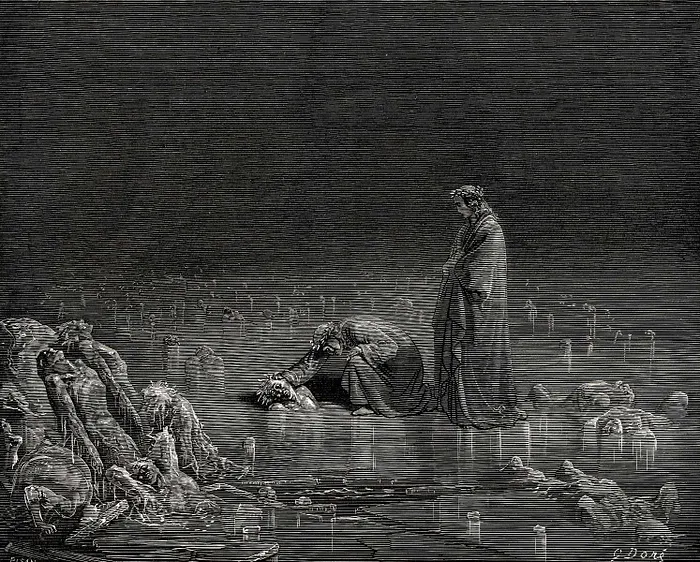
“...they who are gone are still here; though hidden they are revealed, though dead they yet speak. There it shines, that little miraculously lamplit Pathway; shedding its feebler and feebler twilight into the boundless dark Oblivion, for all that our Johnson touched has become illuminated for us: on which miraculous little Pathway we can still travel, and see wonders.”
Boswell’s Life of Johnson, Thomas Carlyle
The tapestry of Johnsonian scholarship is rich. Lively debate surrounds the interpretation of her works, and the excellent primary sources available to our latter selves have allowed close study of each period of her life - her suburban childhood, the tumultuous years at Lincoln High, her matriculation at Temple, the struggles of the GEICO Period, the flourishing of the Allstate Period, and the tragic transcendence of the Hospital Period.
But there is a missing patch to this tapestry. Amanda Johnson’s life is not complete without the so-called “Empty Period” between 2020 and late 2022. The paucity of attention it has received is understandable - it is chiefly known for its lack of artistic output. But it is key to understanding the Allstate Period, and I believe that the sole surviving work of the Empty Period, Untitled No. 4, is among Johnson’s best.
The chief characteristic of the Empty Period is its coincidence with the COVID-19 pandemic. Though it only lasted four years, the pandemic is synonymous with the early 21st century to the public. It distills the spirit of the time: loneliness, competition, inequality, and most of all the deluge of information. This ‘deluge’ was paltry by modern standards - Johnson was absorbing, at most, half a terabyte per day - but it was significant for the human brains of the time.
This made the Empty Period a crux upon which Johnson’s life turned. Left isolated and unemployed, she was forced to grapple with the fact that she had been her own greatest impediment to artistic production, and confront the fact that she lacked the gifts to be truly great.
Untitled No. 4 is the essence of this nadir. Its form is simple to the point of cliche: a black square on canvas, painted in a single frenzied evening. Present attitudes toward the work within the Johnsonian community can be summed up by Carson’s comment that it “represents a symptom of Johnson’s depression… at the time.” This is true, but reductive.
No. 4 is a repudiation of Johnson’s neuroses. Her desire to be taken seriously, her self-imposed restriction to convention, all is thrown away. No. 4 is the first of Johnson’s works to display the glimmers of originality found in the Allstate period. But it should not just be understood as a missing link between the two major periods; rather, No. 4 has many of its own merits.
In it we find the black rectangle of a dead screen. Correspondence reveals Johnson wished to retreat from her screens, but did not feel in control of her own actions. In this sense, No. 4 is a reassertion: Johnson could not even control the small universe of the apartment, but she could control the canvas.
So if No. 4 is a reaction of Johnson to her own limitations, then we must consider the nature of these. From a modern perspective, it is easy to forget that Johnson was almost unbelievably hobbled. For example, the belief that American citizens could see into the ultraviolet and taste magnetic fields by the mid-2010s is ahistorical, propagated by sims to spare their users genuine distress. Johnson’s blinkering is expressed most powerfully in Untitled No. 4; this tragic aspect of the work has long gone unrecognised.
A closer look reveals more. We applied holographic viewing techniques to No. 4, allowing us to analyse details too fine for Johnson’s senses, which nevertheless reveal patterns of great subtlety. The savagery of the brushstrokes and traces of environmental chemicals allow us some insight into Johnson’s mental state at the time, with striking results. Sentiment indexing reveals both self-hatred and reactions against this, including the seeds of the radical hope that would define the Allstate period. Perhaps we should take Johnson’s image literally: a dark pool, beneath which the currents flow swift and deep.
It may seem Johnson thought little of No. 4. She disparaged it indirectly in surviving correspondence and destroyed it a week later. However, Johnson’s method of disposal - a dedicated trip to cast it into the local dump - is revealing. And we believe its legacy was more durable: the Allstate period began six months later.
On May 24th, 2021, Johnson wrote in her diary: “Feels weird to think that no one will ever read this. It’s only sinking in now that no one cares. That I’m just normal. Why does that hurt? What did I expect?”
We wonder what she would have thought, had she known that those words would one day be recovered using techniques incomprehensible to the greatest scientists of her age; that every impression she made upon the world would be reproduced; and that mountains would be broken down to house minds dedicated to the study of her works. In a literal sense Amanda Johnson was unremarkable. She received no more and no less than any of those first hundred billion who broke their backs raising their children to the stars.
A hundred and twelve trillion joules were expended to recover Amanda Johnson. She was unremarkable, too, in that she might have been a bargain at a thousand times the cost.