Milk of the Khalim
“It is an age of feasting - your problem, Batu, is that you are not a buzzard!”
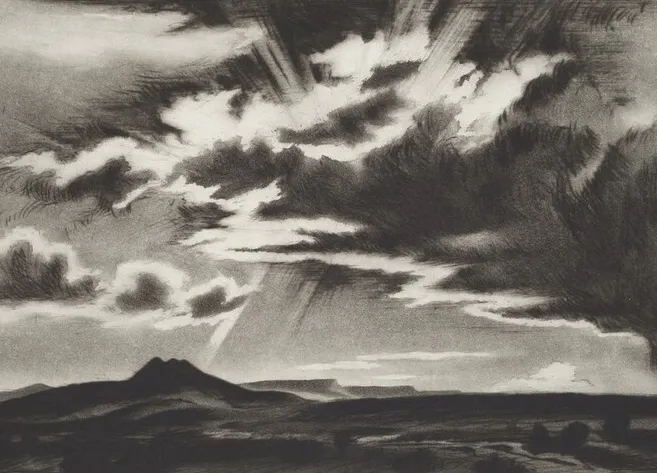
We ride into the east.
“It is an age of feasting,” declares Qara one wide and windswept morning. “Your problem, Batu, is that you are not a buzzard!”
And he laughs until he coughs, spraying spittle between broken teeth, staining the ground with life. Two days later Qara is dead. His lizard eats well and tastes the air after picking his bones clean. Its saddle is taken for our youths who will soon be old enough to take their own mounts.
Qara’s lizard glances about at us while we make camp, black eyes glittering. But it looks one too many times at Tarkhan - she beats it until it hisses, and leaves it sulking with the pack-lizards as she joins us at the fire.
“Damn things are getting ideas,” she says darkly, taking a swill from her waterskin. “Beasts’ll be the end of us all one day, mark my words. I can see ‘em thinking. Living men taste better than dead. They’re forgetting their place. And then, men eat khalim, so why shouldn’t lizards?”
In the South light filters more freely through the firmament of cloud that divides the mortal world from Heaven. There things grow freely, and the men are stagnant in body and mind. By comparison, our lands are a twilit world of rock and dust. But they are also the resting place of the khalim: those great whales of Heaven who are born and live beyond the firmament, and only touch the earth in death. Their corpses are our only sustenance, but it is richer fare than any Southerner could hope to know.
If lizards and other beasts were to begin eating them, they would taste the khalim’s heavenly milk, and they would see the sky bend around until it touched itself at the other horizon. Then the beasts could look upon themselves. They would become cunning like men, and chaos would reign. The oldest stories abound with such tales. So we watch the currents of the skies to be the first to each fall, and guard our prizes carefully.
“The lizards grow strong on the milk of our blood. Qara was fierce,” I say, “and now I have seen his mount bear a dozen lashes without flinching.”
There are nods and murmurs of assent. Tarkhan snorts, but says nothing and slurps her stew. The others turn back to their conversations while I drain the dregs in my bowl.
Though our mouths are dry and my stomach twisted with hunger, our lizards remain hale. They eat freely as we ride, tearing at the plentiful corpses. The bodies of starvelings mingle with those taken by the sickness that claimed Qara. The khalim have been sparse this year, with fewer falling than in living memory, and with their rejection has come the plague. It is a grim season. But none doubt its cause, for the failure of our ancestors during the last war still casts its shadow over us.
More and more we come upon the remains of caravans: ribs of fire-blackened bone and men whose fingers are twisted into claws, starving even in death. Some have scratched at the earth and stone where they lay. Their legacies are fragmentary ravings. There the lizards may feast. So their bellies hang pendulously, and their claws clatter heavily over the slate.
In these times I keep my kin close about me. Little Rakh rides behind me, arms wrapped about my waist, watching the landscape pass with wide eyes. He has never known the fat times, and I pray that one day my son will sit around a fire laughing and thinking easily of the hardships.
Sarangerel is older, and by night I weave with her. She has taken to the craft well, and the fibres running through our hands distract us from cramping stomachs. I think of how it was with my mother: her calluses brushing my knuckles as she guided my fingers, the smell of the petals she wove into her braids. But this is another thought I need the craft to distract myself from. I do not want to think of Mother, for then I will think of Oyunbileg, my sweet Oyun -- and I cannot continue. I must fold inward like the hoarbush. It would be too easy to slip away in the darkness and lie amongst the dead, never to rise again.
It is a damp evening. Conversation is muted, but I can hear low Borjin voices from behind my tent.
Yangir spits into the fire. I can imagine the butcher’s rangy form folded up against the cold in that peculiar way of his, one leg folded over another. “Khasaar Bat was a fool, and our ancestors fools to follow her. What’s there to gain by running into southron spears?”
There is the low clattering of ghemel sticks. Someone has cast their play, eliciting a low curse from Yangir.
“You’d go against the words of khalim?” says Timur, and I add the stout skyseer to my picture. “And don’t insult the ancestors. You’ll stir up Heaven even more.”
“Ha,” Yangir snorts. “Heaven can wash my feet. Delivering us these excuses for khalim, with their bitter milk.”
“Better bitter milk than none at all. You know we need more, Yangir, Anar is spending too much time with that Sarangerel girl.”
I stiffen in the darkness.
“He won’t marry a Nuryat. Not while I draw breath.”
“If Heaven wishes it, Yangir, he will. What are you saying? Do you really wish for this clan-feud to continue? Would you rather we adjudicate our own disputes, then, ignore the wisdom of Heaven and scrabble in the dirt like beasts?”
Yangir sighs. “No, but I know Heaven wouldn’t do such a thing. And they’ll have to wait, anyway. We’ll need milk for the inheritance of Qara’s lizard, the saddlebags, that child Baarin wishes for…”
They began to talk of minor matters. I share Timur’s hope: Anar is all I could wish for in a match, save the fact he was born a Borjin. Our clan’s feud has been long-simmering, and like a stew it must be plucked from the fire lest it boil over. But who can know the ways of Heaven?
Starving foes eat iron, as the saying goes.
The game continues, wood clicking against wood, the fire hissing and twigs snapping.
We spend the next month traversing the Yagaad Yum. Vast and shattered plateaus swallow us; we ride in silence. There is no earth here, only the dust of a place that has died long ago. The grey sky melds with the fractured slate below. Nothing regards us. We hurry along, eager to be beyond.
Eventually the great steps flatten and we strike out once more. Here there is a choice: west or east.
“We do not have the provisions to make the eastern pass,” says Tarkhan bluntly. “It must be the plains.”
The fire is crackling merrily, surrounded by dozens of grim faces. All have turned out to hear the discussion, for our future hangs in the balance: will we take the open country to the west, and hope for deliverance, or cross the mountains by the pass to the east, and take our chances with the sky’s differing currents beyond? We have no milk left, and must trust in our blinkered, mortal senses. The air is cloying with incense; we must take what favor we can from Heaven.
“Slow death leaves us just as dead,” Yangir replies, biting off his words. “Bleed the lizards and we can make it. Have you Nuryat vegetarians forgotten the tales of the last famine? ‘In the east the khalim fell like rain’.”
There are murmurs of distaste at the thought of drinking lizard-blood, for man’s proper fare is khalim. A perversion, but necessary in desperate times such as these.
Rakh fusses in my arms, sensing the mood. The bickering continues until Tarkhan scoffs and turns to where Timur has been conferring with her fellow skyseers.
“Well? Do the currents favor the west or the east?”
“Of course we cannot see beyond the mountains, but the western circulation is sluggish, and it has been a cold season. It’s possible that the pattern Yangir speaks of has returned. But there is another matter: Erhi has been tracking the early traces of a khalim for some few days now.”
There are exclamations at this. My stomach clenches, and Sarangerel reaches over to touch my shoulder, furtive hope in her eyes.
“Calm, please,” says Timur, “Heaven is not so merciful. The currents of the sky mirror those of the earth here. Should it fall near us, it is likely the khalim will be broken upon the pass. But Erhi has seen only the faintest traces. It is no sure thing.”
It is enough for us.
We ride between great lakes where the water stills as we pass. It is black water, deep as the earth itself, worming its way into the heart of the world. Furtive things wait hunched in the shallows for us to drink; but it has rained heavily, and our waterskins are full.
Gnarled and brutal bushes glower at us as we pass like the jagged peaks behind them. As I weave their thick, waxy leaves, my mother’s face returns to me: her broad features, weathered by years of riding. The way its lines would crinkle and fracture like slate in winter as she laughed.
I show Sarangerel how to bend them without breaking, and try to ignore her retching outside the tent before dawn.
We pass through foothills to the beginning of the eastern pass. Rain falls for six days and six nights, a gentle misting that refuses to cease. Strength is sapped from our bones.
A day later we begin bleeding the lizards. Their blood is hot and bitter on the tongue. Rakh tries to refuse it, but he is too weak to resist. I cradle his small body close to mine and stroke his hair to calm him.
The earth is tortured here. The wide spaces of the world are closed to us, and great slabs of stone huddle amongst one another. Against their cyclopean faces we are drawn together; conversation is stifled by our closeness. At the mercy of their jumblings, we make our way where we can, cast down into perpetual twilight with the deep and secret channels where water makes its way unseen.
This pass is said to be the one Khasaar Bat led her host through in the twilight of the last age. I try to imagine it. The lizards must have stood five abreast, great beasts of war with flickering tongues and dazzling hides. I imagine the stench of thousands of men, the rumbling of chariot wheels beneath my feet. The enormous baggage train that must have followed her.
All for naught. For months Khasaar Bat pillaged the southern lands, then drove the border lords’ armies into the open and shattered them. But when she came to Girsuk, that great citadel of the South, she was thrown back. Three times did she rally the survivors and charge again into the phalanxes of the enemy, and three times was she repelled.
Khasaar Bat’s dream died upon that field. She was bound in heavy iron and brought before the city, where she was cut into six times six pieces, and roasted over an open flame. The people of Girsuk cheered to see her die. So the heavens were thrown into disarray, and we have lived in her shadow ever since.
By night I work with numb fingers in the light of the colours rippling across the sky. I must clench my jaw to prevent small mistakes, and strain my eyes to see. I cannot sleep, my stomach aching, and rest only when I collapse from exhaustion. Sarangerel tries to work with me, but I make her rest, make her take my best cloak and the stew from my bowl. The baby growing within her is still known to only a few.
As we ascend, the world takes on the aspect of an endless dream. While I weave I think of the warmth of my mother’s body, how her voice would thrum through me when I curled against her by the fire, as though we spoke as one. Some nights I think I can hear her voice upon the wind.
Many feuds and three children are buried during the climb. There is much weeping, and we embrace one another. How thin the arms of my fellows are! But near the crest of the pass Timur is vindicated. We watch, cheering with one voice as the firmament parts to admit a khalim. I feel the thrum of its impact just above us. Within an hour’s ride we are upon it.
Its body has been impaled on the ridge, great smooth wings draping down to either side. The khalim’s void of a mouth stares at us as we cut a path up to it. Blue-grey bands ripple across its hide beneath speckles of white.
First there is the practical matter of butchery. Yangir and his fellows set to carving up the corpse with zeal, while Tarkhan and I climb its back and search for the nub that hides the khalim’s milk-sac.
“This one’ll have a lot to say, mark my words,” says Tarkhan as we carry the sac back to camp.
“Hopefully it can spare a thought for Sarangerel’s marriage.”
She grunts. “Me too. Borjin are starting to get uppity.”
I turn my mind to milder things as we drain the milk into bowls: thoughts of the excellent double-layered cloak I will soon finish.
The milk has a heady scent, sickly sweet. My eyes water.
First, though, we put such things aside to eat our fill. It is the most wonderful thing to feast on khalim after so long. As a child I did not know why the southerners were considered closer to beasts than men until I tasted one of their grain-cakes: people who subsist on such things surely cannot be endowed with a soul.
The butchers have banked firepits with the wood and coal we have carried with us up the pass. Haunches are spitted and roast slowly, the fat snapping and sizzling, the air acrid. My face is flushed in the heat. This is good khalim, dense and springy, and full of hearty juices that drip down one’s chin. It is hard to eat slowly, but we must pace ourselves; I watch Rakh as he licks his fingers and eyes the steaks hung to cure. Sarangerel takes twice a man’s fill, and we pretend not to notice.
The next day, it was time to take of its mind. I take my place in the circle. It is a cold morning, sharp and still, and Tarkhan’s teeth chatter softly beside me. I am glad for our feathered cloaks.
We wait patiently while the brazier is lit and Timur dons her graven mask. She asks the khalim’s living brothers beyond the firmament to guide us as we walk among them. Then it is time. The milk in the bowl cradled in my hands is a dark mirror. I hold it for a moment and it stills, viscous and glossy. My eyes are sunken. They glimmer furtively in the light of dawn. I had not realised how sallow I have become, how wraith-like. I try to imagine my mother staring back from the bowl, but Tarkhan is nudging me, and it is time to drink.
It tastes how it smelled. We sit patiently, waiting for the words of the khalim to diffuse throughout our bodies and reach our minds. Warmth washes over me. The brazier feels angry, oppressive; sweat pools in my armpits.
The delineation between then and now dissolves. There are tiny black creatures crawling about at the edge of the camp. They flee when I focus on them, and I pay them no heed.
I am alone. In my peripheral vision I can see the huddled figures of my fellows. But I am lost in the currents of my own mind, and there is a gulf between us. Though I am close enough to Tarkhan to hear her breath, the distance is greater than eight times eight deserts. I could seize her and try to impart the words of the khalim as I hear them. But she would receive it as gibberish, and offer gibberish in kind. Even so, our hearts beat as one.
I observe myself from what seems a great height, and it is the eyes of the khalim I see through, eyes that are dead and yet look upon the living, and the I is dissolving, such that there is only Batu and the khalim --
Batu is part of a whole, and now the khalim massages him, tension unwinding, and he returns to that whole without reservation.
There is a sadness, a pain, a striving, and these are familiar.
Winter approaches. Seen from on high, a camp is a blot against dead land.
The dead thing that was once a khalim strains in agony toward the chaos that screams and twirls beyond the firmament.
It cautions against death. It counsels in its favour.
The khalim completes by taking away. The whole that contains Batu sees this and understands.
I awake with the memory of cold iron and dignity.
We rise sluggishly and embrace one another, stoking the brazier and huddling together for warmth. Bodies are explored with uncertain hands. There is still a fragility to ourselves, and we are not conscious of the presence of those around us.
By midmorning we have eaten and returned to the world. Discussion begins in low voices. It is hushed, an intense patter.
The infinity of the visions compress now into words we half-understand. While our memories are fresh and our instincts dulled by the milk, we plumb these depths and find solutions to a dozen spats.
Soon the conversation turns to the true issue.
“I saw failure,” says Og. “Stagnation, and death.”
“We are one creature. One. That survival, that death matters. But I also saw a smaller creature taken from the larger.” The words sound strange in my mouth, but I can see the others understand.
“So it’s to be a sacrifice, then,” says Timur, her face grim; Og picks at his nails. “Even with this boon, we’ll be sucking bones by the time we reach the plains. The khalim has seen the currents; it knows we’ll starve if we don’t cast one of us out.”
There is a little debate regarding the nature of this. Just one exile? Must we lose one of our own?
“I saw a completion by sacrifice, but it was not a division. Not a fracturing. A single entity, cleaved from the whole,” I say between Tarkhan’s protests.
I am adamant, and in time my fellows come around to the idea. There is silence for a moment before Og begins the true conversation.
“Not a skyseer.”
“Nor a woman.”
“Of course you might say that, Timur --”
“No, no women. Nor one who is skilled with the lizards.”
Discussion continues in this vein for some time. I begin to see something half-glimpsed, an aspect of the khalim’s words I did not want to consider. A knot of worry forms in my stomach.
“What of young Og? He does not have the skill of his elders,” Timur posits flatly.
“No! I’ve been studying under Yul! I’ll be a tracker soon, and don’t eat as much as a grown man.”
Timur replies: “Hmm, but even the buzzard abandons its young in a time of famine. Perhaps it is prudent. You may be small now, but you will eat like a lizard when you are growing.”
“No,” says Og, fighting back tears. “I’ll be useful, you’ll see. There must be someone else. What about -- what about Anar?”
Dozens of eyes turn to him. At my side I hear Sarangerel take a sharp breath in. Yangir smiles, a wide and cold thing that does not reach his eyes.
“Now that is an idea,” he says. “What better to cast off than that which already separates itself?”
Anar tries to defend himself, but his Borjin fellows have turned against him; or if they have reservations they hold back as Yangir presses the attack like a lizard worrying at a limb.
Tarkhan mounts her own defence, but many of our fellow Nuryat seem content to let the Borjin diminish themselves, not conscious of the precious unity at stake. Sharp voices echo off the steep walls of the pass.
Above all something feels wrong. They have forgotten what the milk has told us, I think, in their haste. Yangir especially. He has always been too influenced by the ideas of the earth. And now this one has crawled up from deep cracks under the world, too appealing, so much that he has convinced himself it must have been granted by Heaven. But Heaven does not grant conveniences.
“So,” says Yangir, looking around triumphantly. “We are decided, then? It is to be Anar.”
Silence for a moment, the crackling of the fire.
Before I can stop myself I rise, my bowl clattering against the rock.
"This will not be. I will not have the words of Heaven twisted in my presence for these worldly ends!" This -- this performance is unbecoming of myself, this venue, my lineage, but I find that I no longer care.
"Heaven tells us there must be a sacrifice,” I continue. “Very well. Then let us choose with dignity!"
Yangir spits. "Bah! We have chosen. You debase yourself, Batu, when you stand against Heaven. See how he would have us bow to the justice of a man?"
Sarangerel is downcast, fidgeting, but Anar meets my eyes with a fierce hope. The faces of the Borjin are hard, but from amongst them comes old Erhi's voice, dry and fragile as parchment.
"No, Yangir. Hunger must not make of us beasts."
At once the fire leaves me. The milk has stripped the layers from the world. It was this that let me speak; but now I look around, at the faces of my people, now strangers, as though I can never know them again.
And then I realise. I cannot attack Yangir for shying from the khalim’s will and refuse to face what it has told me. That which I have known all morning but have been too cowardly to face.
I step forward, calm, my heartbeat slowing. “It will be me. Look me in the eyes, Yangir, and tell me that is not what you saw. I must leave you.”
Gasps from around me, and all eyes are on Yangir as he tries to meet my gaze, fails, cringes backward. He has the dignity to attempt no rebuttal; I can see on the faces of Nuryat and Borjin alike that they know exactly what I mean, that I have articulated the nameless core of the khalim’s message.
Everyone rises; the spell is broken, we have made our decision, and the will of Heaven is clear. I remain where I am. There is a certain pleasure in alignment with Heaven. I feel as though I could vibrate in tune with the wind as it sings between the peaks.
Sarangerel is full of desperate energy, and she clings to me, begging me not to go. Her touch is as fire, but the dead do not flinch from flame. I take her by the arms, though she writhes in my grip; I have always loved her wildness. “Sweet Saran,” I say, “go and be happy. Have many fat children, and think of me only in your prayers. See that Rakh is taken care of. The world has touched me with its tongue of iron, but there is nothing to be gained by tormenting yourself and making it crueler still.”
She is taken from me by many hands, and handled kindly, though she wails as I make my way to where Erhi waits with the paint and the cloak and the mask of the Stranger.
I am allowed to remain with the clan during our descent. Our bags are heavy with plunder from the khalim, and the mood is peaceful. I finish the new cloak two days before my banishment. I think of when I was small, when my mother would let me ride upon her shoulders. Sarangerel does not look upon my face as she accepts it, but she wears it close about her that night at the fire, and it fits her well.
We part ways after emerging from the foothills. I glance back, once. Sarangerel is looking at me over her shoulder, but she averts her eyes, and turns to focus on the northern horizon. She rides shoulder-to-shoulder with Anar, and Rakh behind her in the saddle; her belly is just beginning to show. It is with a bittersweet pain that I silently wish them the best on their journey.
Time passes. Soon I discard my mask: a Stranger without a community is meaningless. I eat well from my bags, and my lizard is happy in this new land - there are no corpses of men here, but small beasts flourish. A carpet of ochre shrubbery extends to the horizon, rising to my knees.
Once I see an unfamiliar caravan passing in the far distance, but pay it no heed. The days have blurred together by the time I begin to grow thirsty. I have managed to capture some little rainwater, but it is not enough to sustain us.
Delirium follows soon after. Hours pass as weeks and days pass as seconds. Spots swim in my eyes, or perhaps buzzards circle far above. I know they will be disappointed. My lizard already noses at my tent by night, scenting death.
I wander aimlessly. The reins are supple in my hands; I fidget. I find myself at the base of the mountains, following the line of the foothills. In the evening I come upon the broad mouth of a cave: I lead my sluggish lizard into the embrace of darkness, stumbling. My steps echo.
Soon I must find my way by touch. I pick my way over loose rock, and it is only when I stagger to avoid a stalagmite that I realise I can see. Faint light blooms from an opening in the cavern wall.
Approaching, I look out into a depression in the earth tucked between foothills. It is filled with the broken body of an enormous khalim - a creature far larger than any I have heard tell of, an ocean of flesh. It is so fresh that steam still curls from its body as it cools.
But there is a pool of rainwater at my feet. I fall to my knees and drink like an animal, my tongue scraping painfully against rock.
When I rise my lizard has deserted me, and is nosing the corpse. I cannot say what makes my mount behave as it does. Perhaps it has grown frenzied by our exile and its closeness to me, or knowledge of its impending meal. Perhaps, like some half-recalled face told me long ago, it sees a chance to transcend its nature. Perhaps it is only the thirst that makes it mad.
Whatever the reason, such a thing cannot be allowed under Heaven. It stands there placidly, lapping at the viscous fluids leaking from the wound, and pays me no heed as I approach and drive my dagger into the nape of its neck.
I straddle it as it thrashes, refusing to accept death. With my thirst quieted a little I begin to remember - my father would not let me watch. His hands, rougher than my mother’s, were gentle but firm as he held me back. As I have aged I have understood him more and more; I appreciate that I never saw the lizard’s teeth close around her cold limbs, never saw its tongue flicker out to taste her blood on the air. I finally admit to myself that I hate it; it was the sickness that took her, but as this lizard ate my mother’s body it erased her from the world.
In time, the light in its eyes dies. I slump against the wall of the glade, the lizard’s blood drying on my arms. When I rise, the khalim is cloaked in the shadow of evening. A vibration thrums through my arm as I lay a hand on its hide.
The creature yet lives. I am suddenly feverish: the khalim must surely be close to death, and is mighty indeed to have survived its fall. Clambering over the folds of its flesh, I find the distinctive ridge and nub in the fading light - then I am tearing with my knife, fresh blood coating my arms, burrowing into its form. I am up to my elbows in gore when I find the milk-sac.
The taste is painfully sweet, burning bright all the way into my stomach. I stagger backward, collapsing onto the carpet of flesh beneath me.
Immediately it is upon me, tearing me from my body. The firmament warps and splits above. Flashes of colour sear into me when I screw my eyes shut against the assault. I am flayed down into infinitesimal parts, to be scattered on the wind and observe:
Batu is part of a whole that is not and yet shall be.
A great hall is raised, skin stretched over bones, and a fat host to inhabit it. Many lizards feast and riot in the caverns.
Winter approaches.
The khalim shows the whole that will be Batu a vision of southern walls, of his entrails slithering through his fingers like grass snakes.
He sees Khasaar Bat, her hair wild, her face obscured in shadow. The light that silhouettes her is blinding. She extends a hand.
The world is warped toward its inevitable course and Batu is the khalim, seeing the curve of the horizon.
It is to be a season of death.
When Batu wakes he is coated in delicate dew. He arises, purposeful, and gathers his things.
There is nothing he would like more than to make this tranquil place his home, to weave and weave until the days grow short and long and short again. But he cannot remember the feeling of leaves under his fingers. He has forgotten the face of his mother. Such things do not survive the transition between ages.
That Batu is dead - in his place a new man has been born. He is still hesitant, for there is much he does not know: how to raise a host, the breeding of war-lizards, which Southern provinces are most lightly defended. But he will learn.
The skyseers of many clans will have marked the passage of this khalim, and will be making for the foothills even now. They do not know that they ride to meet their lord. They, too, will learn.