Second skin
A young man gets dressed for the future.
In the end I only had ten minutes to pack. The new world had a lot of compassion for people—far more than before—but it moved quickly, shimmering at the speed of light. The machinery of physics still held; I was lucky to have any slack at all. I knew that every second I spent considering what to take was enough time for empires to rise and fall in silica, a delay that rippled out across timelines millennia deep.
I spent two minutes looking around the apartment, which was enough time for a dozen crystal cathedrals to be raised around Jupiter. I knew that and savoured it, savoured the petty selfishness. I’d spent so much time on all these trivial things. How long had it been, collectively? Scrubbing grease off the stovetop, agitating all the congealed fats, gagging slightly at the smell? How long to buy and resell armchairs, to haul flat-pack furniture in through the stairwell, to hammer dowels and turn screws? So much of it was trash now. Any object without meaning was doomed thanks to the new matter compilers, like a horse in the age of the Model T.
I thought about taking a book or two. Some were special, true: the copy of Fellowship that had accompanied my whole life, spine bleached and binding disintegrating. I spent another ten seconds pondering that (during which ten thousand tons reached orbit and the dismantling of Madagascar began). I set it down decisively. It was too pat, and besides, when had I actually read it last? When I was ready I would return to the text and it would come to me as a dream. As it arrived for Tolkien. As it should always have been. I left the books. I wondered if the sunlight outside was dimming, but I knew things weren’t far enough along yet; the first probes would still be on their way to the Sun.
The bathroom, the bedroom: leave them. Reminders of incapacity, of crude functions I would soon abandon. Some bedrooms were great places, but not mine—like most apartment bedrooms. It was a place of self-betrayal and unconsciousness. I moved through it and opened the wardrobe.
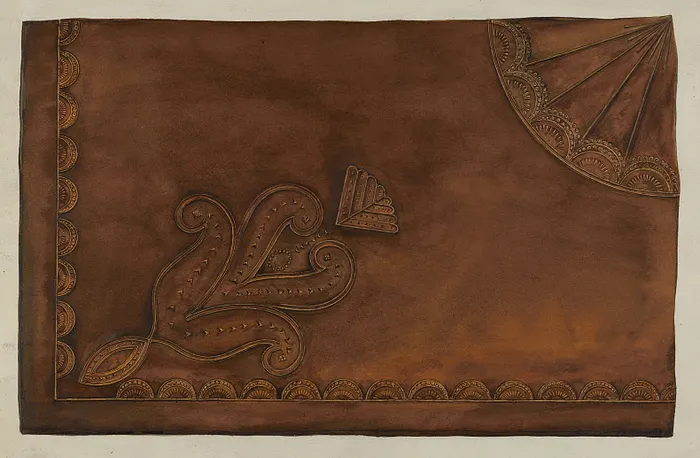
Here was something. Most of the clothes—Uniqlo efflux—were junk like the furniture. But there were a few highlights. Rifling through the hangers, I paused on the good jacket and pulled it out to examine all its cracks and creases in the afternoon light. Good leather, thrifted years ago and worn every weekend since. Several girlfriends had said it smelled like me; a second skin, something I had broken in and made my own. Real leather would never be produced again. Wasn’t that morbid? No, it would be morbid to forget. I thought about all the hours I’d spent in the gym, the exams I’d failed, my body curling and cramping, beating my hands against my temples—and always the knowledge it could be worse. I remembered the footage from famines and factory farms.
It was nice to be alone in my bedroom. It was nice because I knew I would soon join everyone else at the frontier of the expanding bubble that was now our civilisation. I would have to leave my skin behind along with my body, but perhaps I could take skin of a different kind. A token of what mattered about Earth, rather than something from my own stymied life. Something in me surged, impatient; some animal instinct that knew, far above, the lasers were already glittering in the darkness. Time to stop lingering.
The ship found me in the courtyard on the ground floor. There was something absurd about this mirrored sphere hovering above the fake grass.
“Can I get a bag for you?” it asked.
I looked at myself reflected in its surface, my hair tousled, the jacket slung over one shoulder. Is it so obvious to everyone else that I try to seem casual? I hold on to that for a moment, savouring my humanity, listening to the last tone of that tuning fork struck upon a star.
“No.”